

The BMS Management of the Menopause Certificate (MMC) was created in response to growing demand for peer reviewed, evidence-based education in post reproductive health. Since launching in June 2024, 2,225 healthcare professionals have achieved the Certificate and are now better equipped to deliver high-quality care to their patients.
The Challenge
In 2022 demand for peer reviewed, evidence-based education in post reproductive care was rising rapidly, there were too few trained healthcare professionals available to meet the needs of women seeking support.
At the time, our comprehensive BMS Principles and Practice of Menopause Care (PPMC) theory course comprised recorded online lectures and an interactive day facilitated by menopause specialists via Zoom. While effective and well-evaluated, this format limited the number of learners we could support.
Over a three-and-a-half-year period, the PPMC theory course trained 530 healthcare professionals. However, we also had a waiting list of more than 300 people and demand continued to grow. Capacity was constrained by the limited number of menopause specialists available to facilitate the one-day interactive Zoom sessions, all of whom were full-time healthcare professionals giving up their time on top of their clinical roles. In addition, significant BMS office support involving three members of staff was required for registration and content delivery.
Our goal was to create a course that would:
- Be engaging and relevant
- Focus on clinical outcomes and practice, making a real impact
- Provide concepts and actions that healthcare professionals could apply immediately in clinical practice
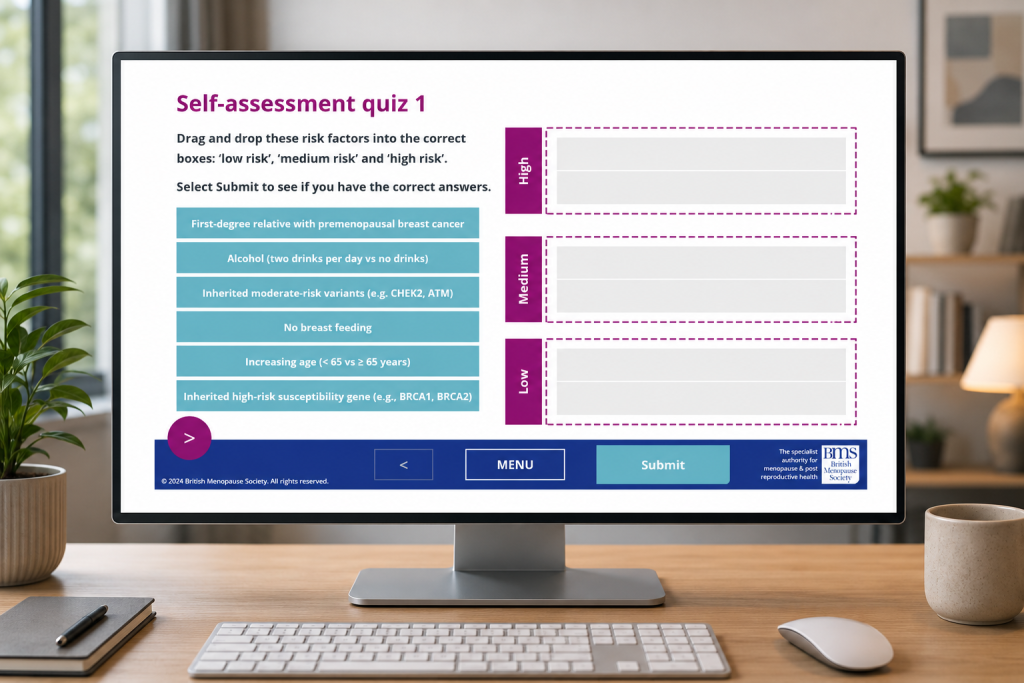
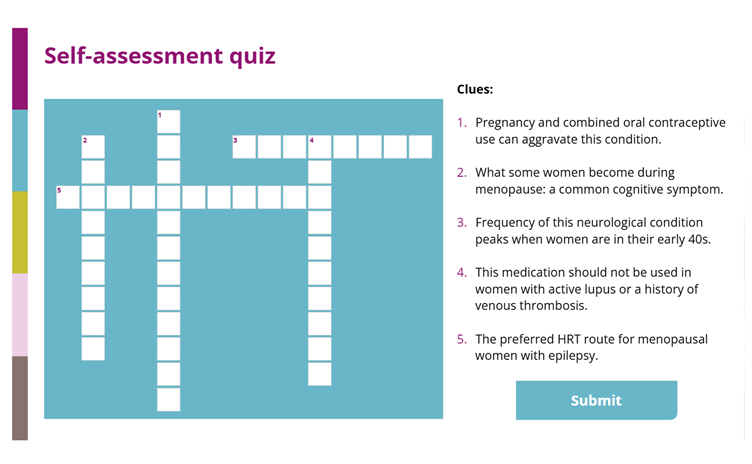
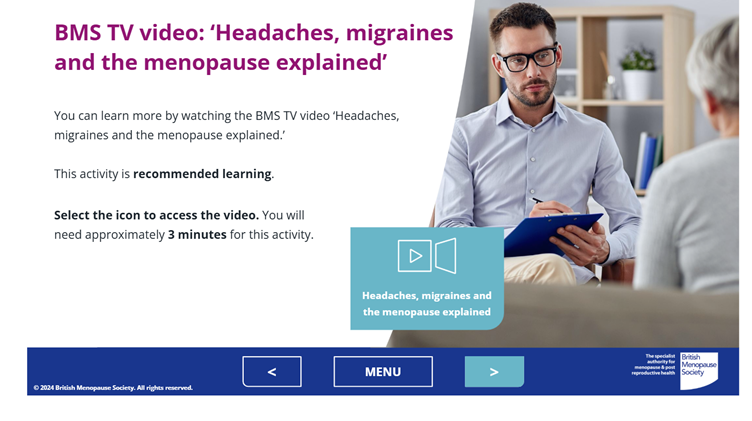
- Offer a visually engaging and interactive learning experience
- Incorporate practical, case-based discussions that brought clinical practice to life
We therefore needed to design a course that continued to maintain the exceptional educational standards for which the BMS is recognised, while significantly expanding our reach to healthcare professionals across the UK and Ireland.
The Solution
This 18-month project took us into new territory. It presented new challenges for both us and Think Learning.
Unlike many of Totara’s existing clients, we required a sophisticated e-commerce platform to support the delivery of training to external audiences, enabling us to establish a passive, sustainable, revenue-generating model, beyond the use of Totara for internal corporate learning modules.
The project required a multi-disciplinary team and an iterative, collaborative development approach. It brought together volunteer expert clinical authors, content developers, expert clinical reviewers and healthcare professional learners. We also relied on a small pool of volunteer clinicians who contributed alongside their already demanding roles.
Clinical feedback was meticulously reviewed and the educational material was refined accordingly. Non-clinical BMS staff provided a lay perspective and led the creation of the digital content.
We used Totara in an interesting and different way to the majority of other clients leading to the creation of a bespoke learning platform. Auto-enrolment was especially important for our organisation – as a small charity with only part-time staff, we would not have been able to process the expected volume of registrations manually. This Totara development was essential to making the course scalable.
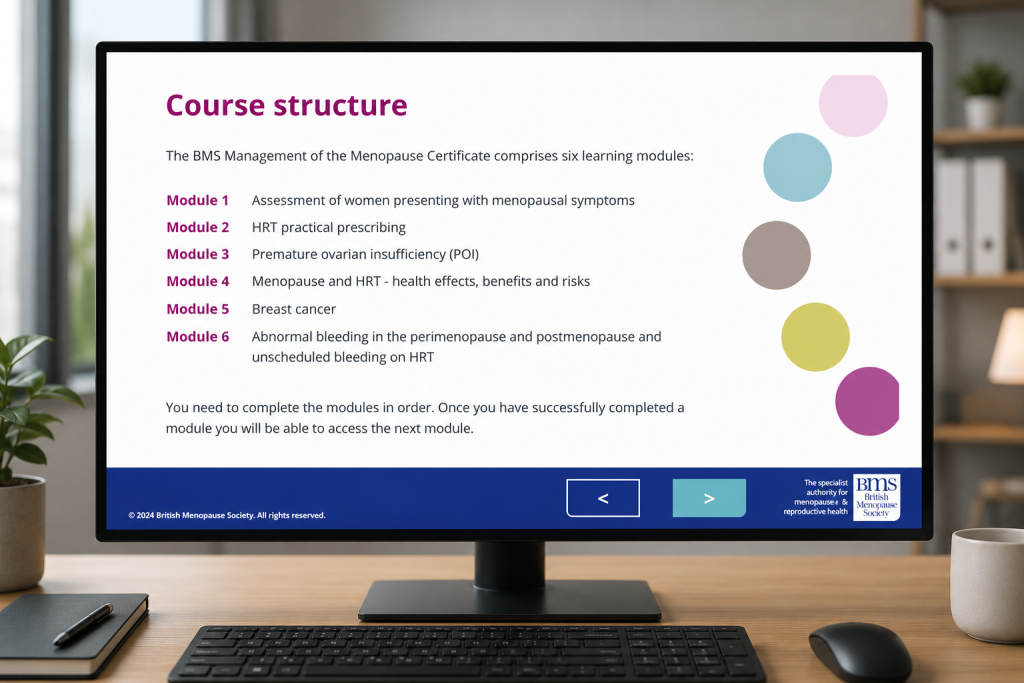
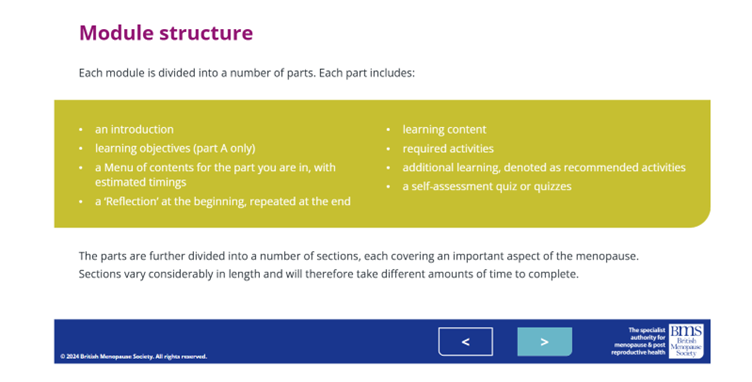
The BMS MMC course follows a set pathway. Within the overall MMC Totara programme, each of the six MMC modules has been set up in a number of parts, each part comprising a Totara course. Within a module, progression to the next part of that module is performed by auto enrolling a learner on completion of the previous part. Then in order to progress from one MMC module to the next, auto enrolment was designed to occur once the previous module’s knowledge assessment had been passed.
The BMS MMC is a professional qualification, so it was important that the certificate of completion set out what the course curriculum covered. A two-page certificate was implemented in Totara, accessible to learners as a Totara course once all six MMC modules had been successfully completed. This two-page certificate was bespoke functionality that required development. As the course was a restricted progression, we required different audiences to enable to `different access levels
The course launch was preceded by 18 months of intensive preparation and training. Think Learning’s support during development, implementation and business-as-usual delivery was vital given the bespoke design within Totara. The Think Learning team was responsive, supportive and consistent throughout, as we problem solved to meet BMS requirements.
The Results
The response to the course launch in June 2024 was immediate. During the three-and-a-half years of the PPMC theory course, we trained 530 healthcare professionals – we have already trained 2,225 learners via the MMC.
More than 600 learners registered in the first month alone, clearly demonstrating the scale of demand, and uptake has remained strong ever since.
Since June 2024, more than 3,500 healthcare professionals have enrolled in the MMC course, helping to improve care for thousands of women.
Totara enables one BMS member of staff to maintain the course, freeing other part-time staff members to focus on additional projects that support BMS members and educate healthcare professionals.
The platform’s reporting and feedback tools have also enabled us to confirm that we are reaching our target audience, while highlighting opportunities for future course development.
We can now update course content quickly, which is essential in a fast-changing medical environment.
Although the initial investment was significant and direct cost savings are difficult to quantify, we have moved from a manual registration process to a sustainable income-generating model that will continue to deliver value in the years ahead.
Learner feedback shows that the course has had a meaningful impact on both clinical practice and patient care.
Measuring feedback has been vital and the statistics show the impact this had had on our learners.
We asked learners the following questions once they had completed the course. Below is a summary of the responses:
How satisfied are you that the course met your needs?
Very satisfied 59.87 %
Satisfied 34.66 %
Neither satisfied nor dissatisfied 3.06 %
Dissatisfied 0.65 %
Very dissatisfied 0.74 %
My confidence in providing menopause care has improved.
Strongly agree 61.91 %
Agree 33.95%
Neither agree nor disagree 2.43 %
Disagree 0.65 %
Strongly disagree 0.74 %
We have continued to strengthen the course and now offer interactive webinars to reinforce the eLearning. These sessions are very well attended and give learners the chance to put questions directly to the course authors. A follow-up survey found that 96% of attendees agreed the course would improve their ability to support women during the menopause transition, demonstrating that it is meeting our objectives.
“Course was very detailed and covered all aspects of menopause. the best aspect of the course was that it was fully online format, with recorded lectures and accessible materials that could be easily reviewed at any time. this flexibility made it much easier to balance learning with work commitments”
BMS
Customer
Connected Partner

Customer
Region
United Kingdom
Connected Partner