

Organisations increasingly depend on people outside of their own workforce to shape how products are sold and how customers experience their brand. This is reflected in research from MIT Sloan Management Review and Deloitte, in which 74% of surveyed leaders and managers said that effectively managing external stakeholders was important to their success.
In this article, we’ll explore how a learning management system (LMS) makes external stakeholder training easier to manage and personalise, with greater visibility as delivery scales.
This article was produced in collaboration with Synergy Learning, a Platinum Totara Partner.
What is external training?
External training is learning provided to people outside an organisation’s own workforce. This can cover a range of different audiences, such as customers, partners, vendors, resellers, contractors, or community members. The purpose is to give each of these external audiences the knowledge and skills they need to support your business (or in the case of customers, to get more out of your products or services).
These learners will have different baselines of prior knowledge, and some may access training on a voluntary or paid-for basis, compared to internal employees for whom training is often a mandatory part of their role. As a result, it’s essential that external training is easy to access and relevant to each audience’s roles and needs.
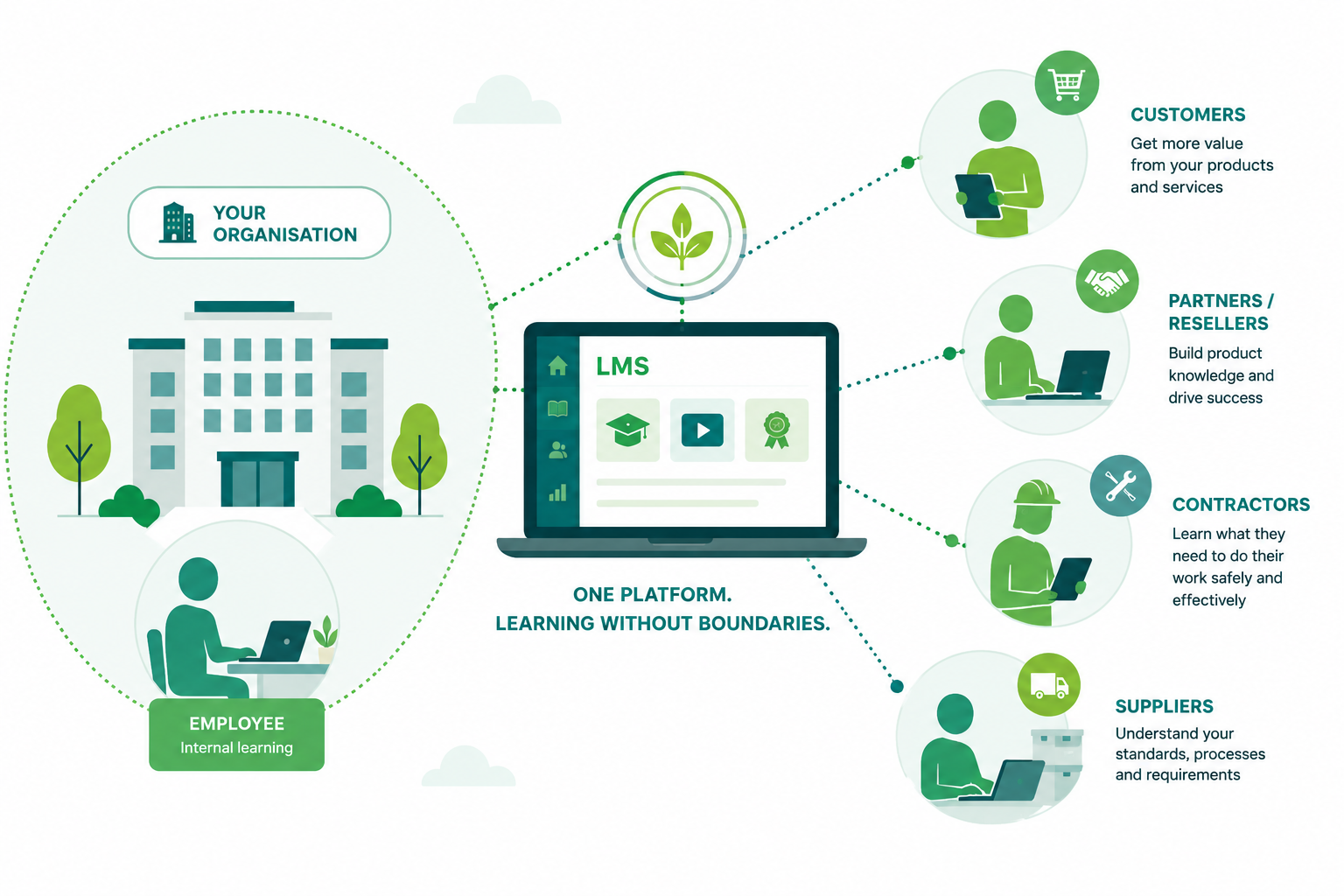
This wider approach to learning beyond an organisation’s internal workforce is also known as extended enterprise learning.
How does an LMS support external training?
Managing external training through disconnected systems can make it harder to maintain visibility and communicate with learners. External training software allows organisations to bring learning together in one place.
A well-designed external training LMS can help organisations:
- Manage multiple internal and external audiences through a single platform.
- Tailor content and navigation based on each learner group’s needs.
- Provide simple registration and self-service access.
- Assign role and audience-specific learning pathways.
- Deliver flexible online, mobile and blended learning opportunities.
- Automate enrolments, reminders and certification renewals.
- Track progress, completions, compliance, and engagement.
Best practices for external training delivery
Effective external training starts with recognising that external partners have different priorities from employees. Making training available, or even mandatory, may not be enough to motivate external audiences to engage with and complete it, so it’s especially important to make sure it feels relevant and tailored to their requirements.
Understand the needs of each audience
The first step is to understand the distinct needs of each external audience, as well as the specific challenges each group faces. Resellers might be looking for concise product training so they can quickly get up to speed on new products, whereas contractors likely want to focus on mandatory compliance training without distractions.
By speaking to the teams that typically interact with these audiences, you can uncover common knowledge gaps and practical constraints. Learner feedback and completion data can provide further insight to steer your design approach.
Keep learning relevant and role-specific
External learners should only see content that relates to their role. Using a combination of tailored learning pathways and audience segmentation, organisations can provide external users with targeted courses and resources without overwhelming them with irrelevant and generic learning content.
Amazon’s Ask Alexa platform, for example, groups courses into product families, which are presented in logical sequences through users’ personalised dashboards. Instead of sifting through a large course catalogue, retail staff can easily find the training they need.
Additionally, you should use a range of formats and content types to suit different learner requirements. Some audiences might benefit most from bite-sized downloadable resources, while others might require in-depth scenario-based videos. Blended learning can be particularly valuable where external audiences require a mix of theoretical knowledge and practical skills.
Make training easy to access
It’s important to remove unnecessary barriers to entry for external audiences; in practice, this means making registration and enrolment as smooth as possible, with straightforward navigation throughout the learning experience. External learners typically won’t have access to company devices or your internal systems, so you’ll need to carefully consider how they’ll access learning.
Both the platform experience and the learning content itself need to reflect how and where people will learn. For example, shop-floor retail staff with limited training time may benefit from bite-sized, responsive training that allows them to dip in and out using mobile devices.
Recognise and reward achievement
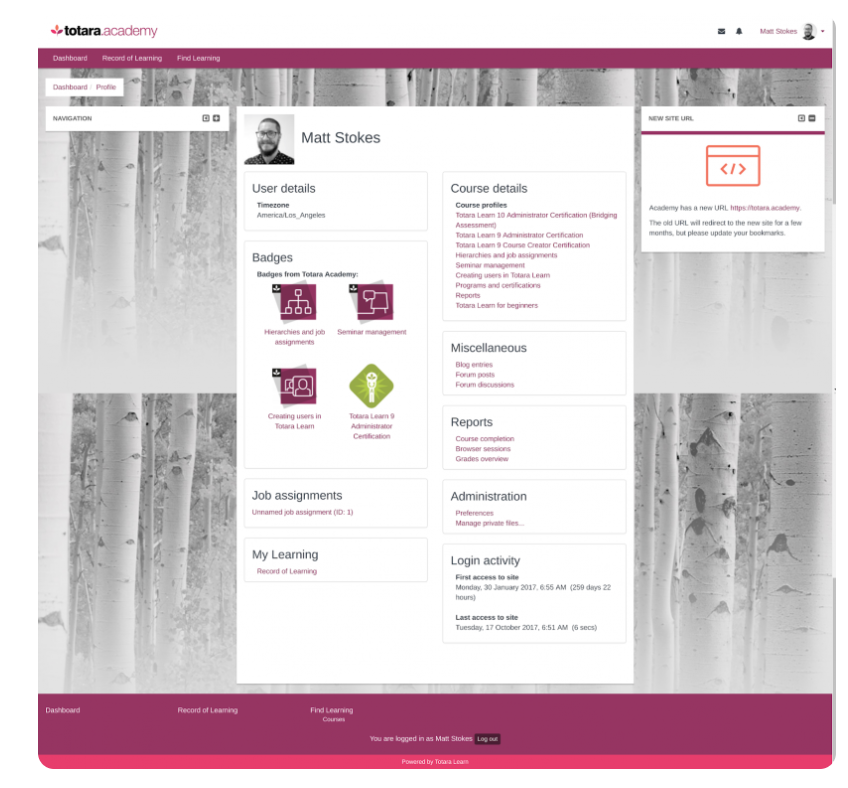
Compared to internal company employees, external audiences may have lower intrinsic motivation to complete their assigned training. Employees typically complete mandatory training as part of their core responsibilities, but other learners (such as retail staff at resellers) may be completing learning on their own time. By rewarding learners with badges, certificates or formal certifications, organisations can give learners tangible evidence of their professional development and motivate them to continue progressing.
Gather feedback and continually improve
Use qualitative and quantitative learner feedback, as well as wider LMS data, to identify where external learners disengage or require additional support. Your platform reports should steer your training approach, helping you refine content and delivery methods rather than simply record completions.
Measure business outcomes
While course completion data is useful, you should ultimately aim to measure how your external training supports your organisational goals. Depending on the audiences you’re training, this could be increased product adoption, higher sales, better compliance or a decrease in support requests.
Aim to define these outcomes when designing your external training programmes, and connect the learning data to the desired outcomes. This will make it easier to demonstrate the value and return on investment of external training, and help you to decide where further investment would add the most value.
How Totara supports external training
Totara’s multitenancy functionality allows organisations to set up distinct learning environments for different user groups (such as customers or stakeholder groups), while retaining central administration and reporting. Each tenant can have its own branding, content and access permissions, ensuring that different groups receive a personalised experience without getting distracted by generic and irrelevant learning. Learners can also be grouped by audience based on their organisation or role, and automatically assigned relevant courses, programs and certifications, reducing the need for manual administration as your wider business ecosystem scales.
An LMS can also remove friction from registration and enrolment, making it simple for external audiences to access training. For example, the medical aesthetics training provider Harley Academy uses a Totara platform integrated with its WordPress website and HubSpot. When a customer purchases a course through the site, their Totara account is created automatically and the learning is assigned immediately. This removes barriers to entry while reducing manual administration for Harley Academy’s training team.
Once learners are enrolled, structured learning pathways can be used to guide them through the content in a logical order. Course creators can combine courses into programs, with content and progression gated based on logical rules and prerequisites, or use certifications to require learners to revalidate their knowledge at defined intervals. Totara’s courses support online and offline learning activities, meaning external training can include digital learning experiences and face-to-face sessions for practical skills, all tracked and managed as part of the same learner journey.
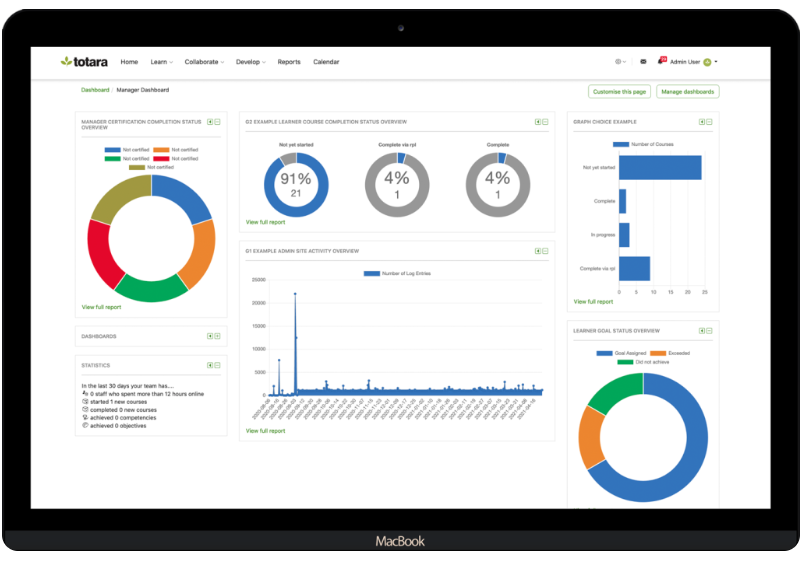
Finally, an LMS such as Totara provides the organisation with greater visibility of external training. Instead of relying on third parties for tracking and completion data, Totara’s reporting tools allow site admins to gain a bird’s-eye view of training across the business ecosystem. Reports can also be filtered so individual partner organisations and tenant administrators can see training data for only the relevant learners. This helps organisations identify gaps, demonstrate compliance and refine their programmes using reliable data. At Harley Academy, improved reporting and automation contributed to a 43% increase in the number of exams the organisation was able to deliver.
Supporting your business ecosystem
The right LMS makes it easier to deliver personalised and measurable learning to your external audiences, allowing you to scale training delivery across your entire business ecosystem without increasing administrative burden. Organisations can centralise content management and automate processes such as enrolment and learning assignment, while tailoring learning experiences to different external audiences.
Totara provides the flexibility to deliver this at scale, with powerful features including multitenancy, audience automation, learning pathways, certifications, customisable reporting, and flexible integrations. If you want to know more about how to build effective LMS platforms for training external audiences, get in touch with our specialists, Synergy Learning.