

Many organisations think learning stops with their employees. But that’s not always true.
Customers, partners, suppliers and members all need the right knowledge to work effectively with your organisation. Whether they’re representing your brand or using your products, learning can help them succeed just as much as it helps your employees.
So, where should you start? In this article, we’ll explore the different ways you can support your extended enterprise, along with practical ideas to help those learning programmes succeed.
Ways to support your extended enterprise
Every organisation’s extended enterprise looks different. Rather than trying to support every audience at once, begin with the groups that have the greatest influence on your business goals and expand the learning programmes over time.
Channel learning programmes
Many organisations rely on external partners to bring their products and services to market. These become an extension of the organisation, shaping how customers experience the brand. Channel learning programmes help ensure they have the knowledge they need to sell and represent products consistently.
Effective channel learning goes beyond sharing product information. Partners need the knowledge to onboard successfully, understand compliance requirements, complete certifications and keep pace as products or services evolve.
Our customer Samsung supports its global smartphone sales operations by providing product knowledge training to retailer and operator staff. Because these learners are often working on mobile devices, the training is designed to be responsive and accessible across a range of smartphones, making it easier for partners to learn wherever they are.
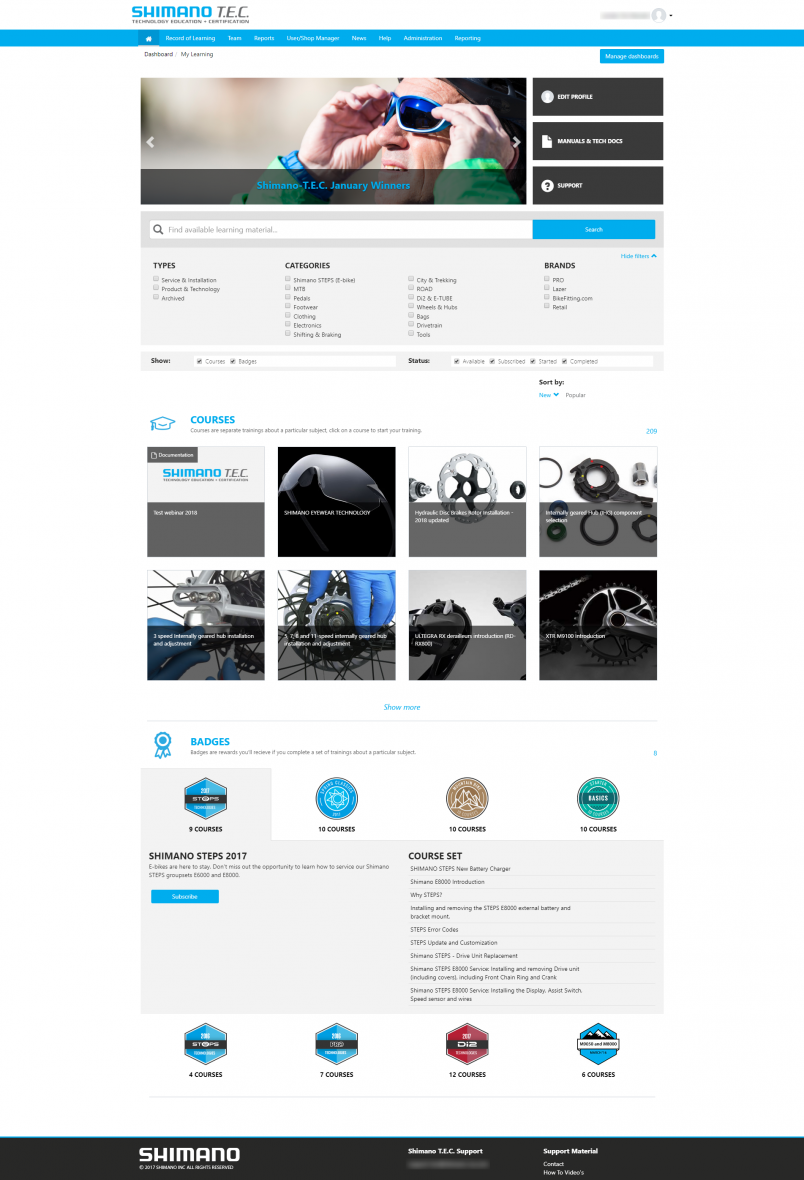
Shimano takes a similar approach with its global network of independent retailers. To help maintain consistent product knowledge and service standards, the company offers an online certification programme covering product fitting, maintenance and customer guidance. The programme includes more than 800 courses in multiple languages and supports over 25,000 learners across its extended enterprise.
Customer education programmes
Customers have unprecedented access to information and opinion. This can be useful but can also be confusing and even misleading. This has radically changed the way companies find, win and hold customers loyal to their products and services. Rather than being ‘sold to’, customer advocacy is better built through offering useful and engaging support. This might include guided learning paths, product tutorials, knowledge resources, certifications or best practice guidance that helps customers develop their skills over time.
Just as with partner learning, customer education works best when content is tailored to different audiences. New customers may need onboarding resources, while experienced users are more likely to benefit from advanced learning or specialist certifications.
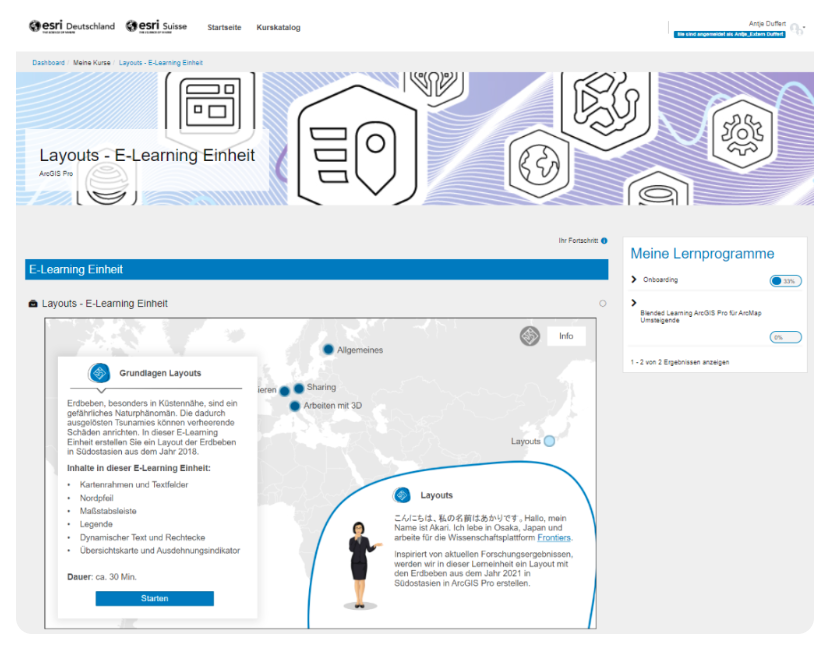
Esri Deutschland GmbH took a similar approach by creating structured onboarding programmes that allow customers and partners to assess their knowledge and follow personalised learning pathways. Since launching the platform, the organisation has seen a 400% increase in users, while giving learners greater control over how they develop their knowledge.
Public outreach learning programmes
Central government and local authorities are recognising the power of offering online education and training to provide support to vulnerable groups, enforce adherence to regulation and explain policy. Public outreach learning programmes also make information more accessible by giving people the opportunity to learn at their own pace. This can help organisations improve public understanding of regulations or provide guidance on topics such as health, safety and digital skills.
For example, the Australian Sports Anti-Doping Authority (ASADA) is a government statutory authority that aims to protect the integrity of Australian sport through the elimination of doping. There are continual efforts globally to educate athletes and avoid inadvertent violation of often complex regulations. Offering engaging learning courses that appeal to the competitive nature of the audience is a great way to raise awareness of a topic often regarded as dry and uninteresting.
Professional associations and CPD programmes
For many professional associations, learning is one of the biggest benefits of membership. Continuing professional development (CPD) and industry qualifications help members keep their knowledge up to date and meet the standards expected within their profession.
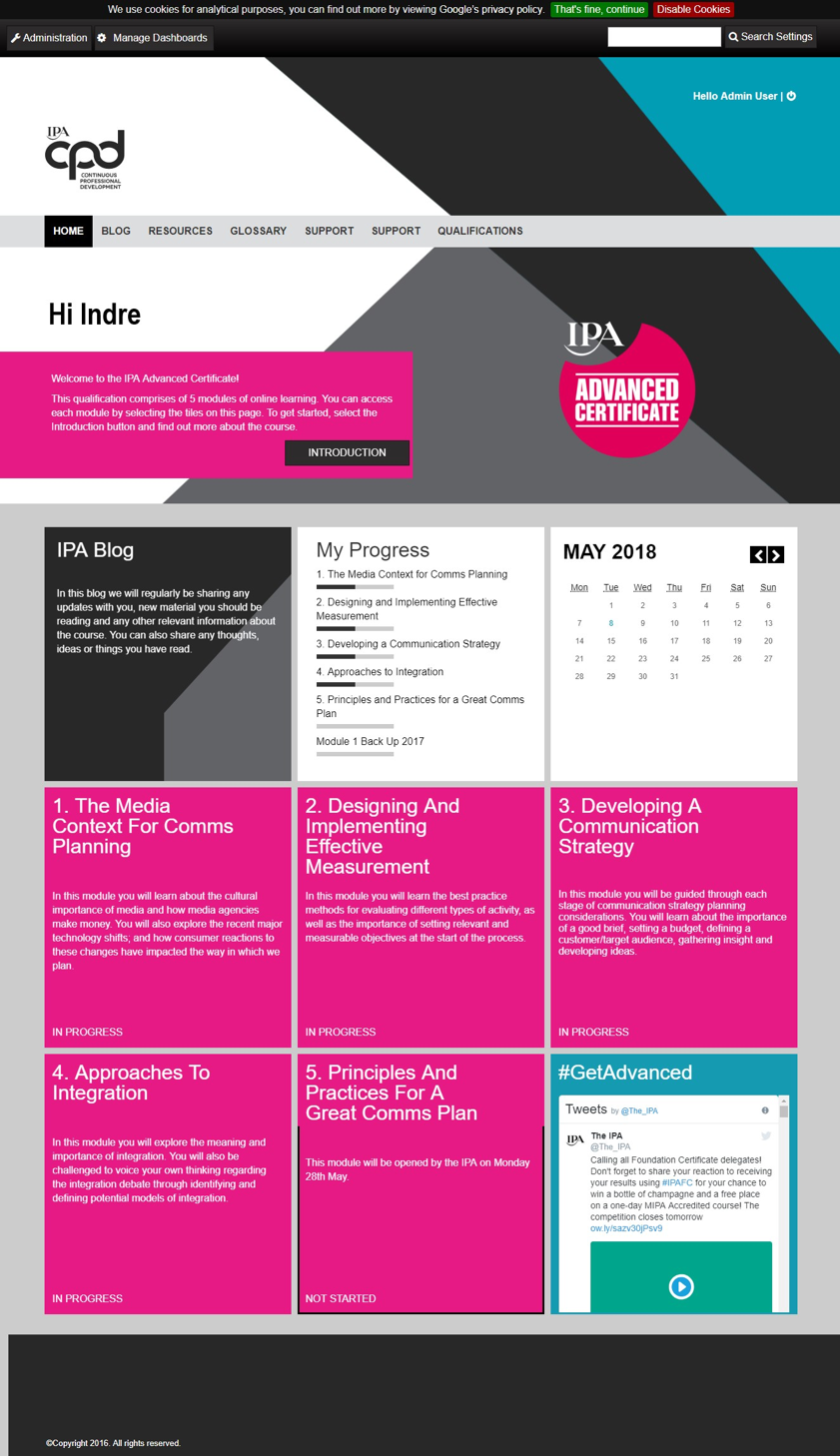
The Institute of Practitioners in Advertising (IPA) is one example of this approach. Its Foundation Certificate in Advertising has been completed by more than 14,000 people across 87 countries, alongside a wider portfolio of industry-recognised qualifications. By combining professional learning with distinctive branding and recognised certifications, the IPA has created programmes that support members while reinforcing the value of its professional community.
Selling learning online
Not every extended enterprise learning programme is provided free of charge. Many organisations choose to sell learning online, creating an additional revenue stream while making specialist knowledge available to a wider audience. A recent Forrester Consulting study found that 96% of organisations with formal customer education programmes either broke even or achieved a positive return on investment.
Selling learning online also gives organisations greater flexibility in how they deliver education.
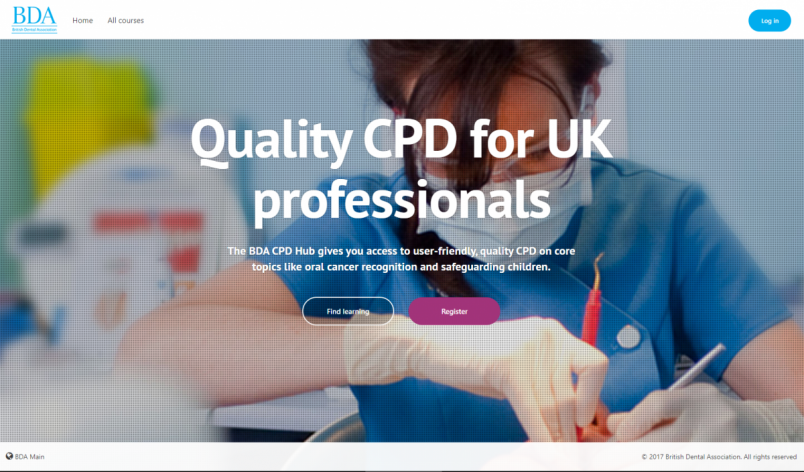
In the UK, the British Dental Association serves over 12,000 BDA dentist members, and alongside free learning resources, it offers paid training for dental professionals, creating an additional source of income that helps support its wider work on behalf of members while making professional development more accessible when it’s needed most.
Communities and ongoing learner support
Many organisations are creating learning communities that encourage ongoing learning beyond structured courses, giving external audiences a place to continue developing their knowledge after formal training has finished.
They give learners a reason to return, creating opportunities to stay informed, solve new challenges and continue building their expertise over time. Communities also encourage people facing similar challenges to learn from one another and share practical experience.
Totara follows the same approach through Totara Community, an open learning community that brings together learning professionals from around the world. Members can access learning resources, share best practice, exchange ideas with peers and continue developing their knowledge beyond structured training.
Maximising engagement across your extended enterprise
Creating learning programmes is only the first step. Keeping external audiences engaged requires learning experiences that are relevant and easy to access. The practical approaches we’ve listed below can help improve engagement across your extended enterprise.
1. Make the most of audiences
Imagine you work in a hospital. While everyone may need to take some of the same learning, perhaps about health and safety or patient confidentiality, your anaesthetists will need to take some different training to your paediatric nurses, or your admin staff, or your senior management team.
Not every learner has the same goals or level of experience. Segmenting your audiences allows you to tailor learning to different groups, whether that’s new customers, experienced partners, franchisees or members.
For instance, you could create a separate audience for local GP surgeries who make referrals to your hospital, or to pharmacists, or to patient groups looking for general healthcare advice. In an extended enterprise like Totara, this functionality is built into the platform, allowing you to easily separate groups of learners and give them access to the targeted content they need.
2. Recognise achievement
While your internal employees’ managers will have access to their records of learning and will be keeping track of their progress, external users of your LMS will probably not have anyone monitoring their training. Putting a rewards system in place can help encourage engagement from people who may choose to access your learning voluntarily.
This could be work-related, such as digital Badges or a certificate to give them evidence of their learning, perhaps to show in their own performance review, or as more of a marketing exercise, with gift vouchers or prizes from your brand.
Mastercard introduced badges, achievement milestones and leaderboards to encourage participation across its global sales teams. Since launching the platform in 2024, learners have completed more than 9,000 learning modules, showing how recognition and gamification can encourage ongoing participation.
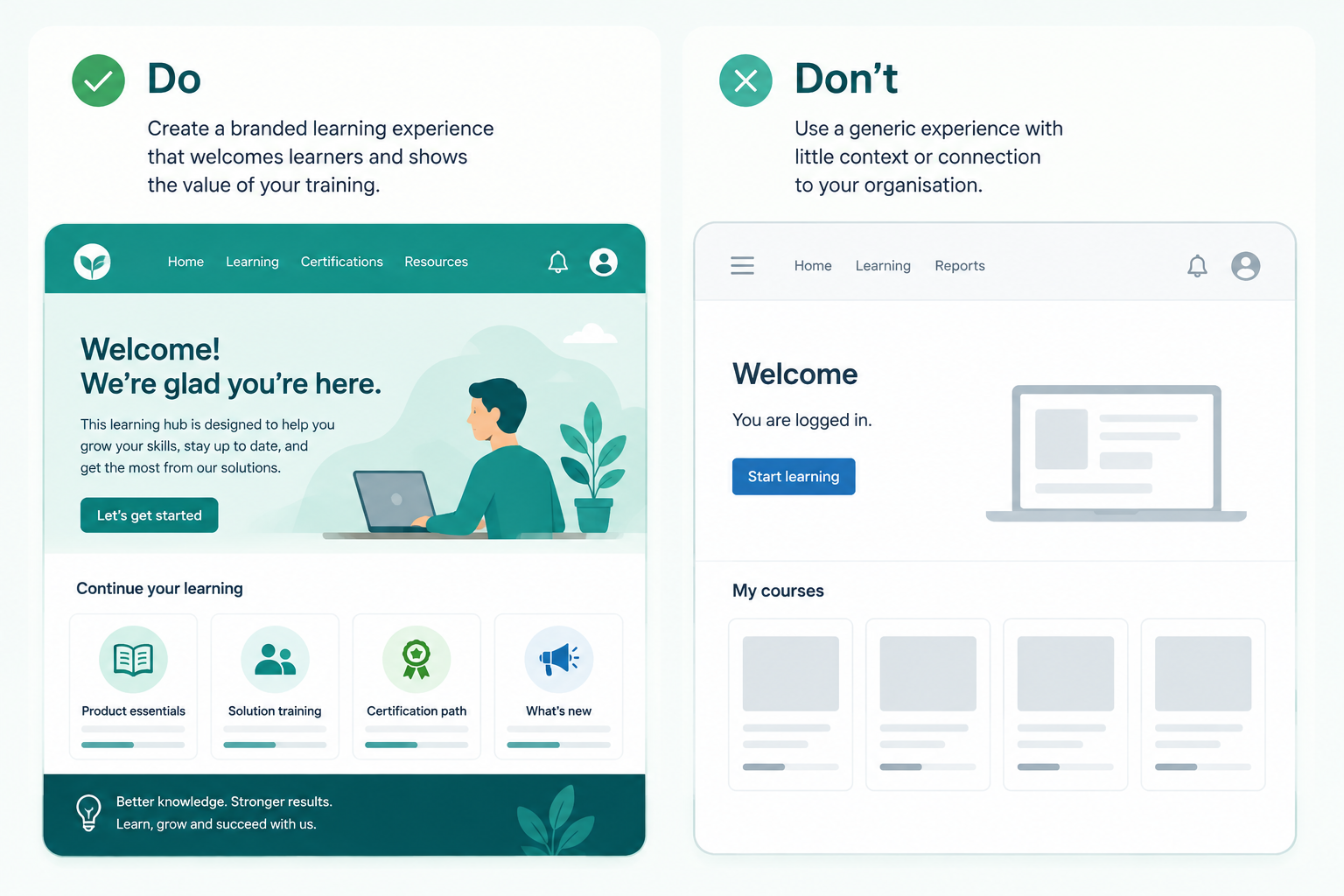
3. Create a branded learning experience
Giving customers the opportunity to learn with your organisation helps them feel closer to your brand, better understand your offering and feel more positively about what it is you do. If you decide to create an extended enterprise LMS, it’s important to work with your marketing team to consider the messaging.
For instance, while your employees may just see a quick welcome message when they log in, you may decide to give third-party partners a bit more context about how the learning will benefit them or give customers some background about the organisation and why you have decided to give the public access to learning content.
Drive success with your extended enterprise programme
Extending learning beyond your workforce doesn’t have to happen all at once. Many organisations begin with a single audience, such as customers or partners, before expanding into new learning initiatives as their needs grow. Taking this phased approach makes it easier to understand what works and build programmes that continue to deliver value over time.
The right learning platform should be flexible enough to support different audiences without adding unnecessary complexity. Totara gives organisations the flexibility to create personalised learning experiences for employees and external audiences alike, helping them build stronger relationships and support learning across their entire extended enterprise. Book a personalised demo to see how Totara can help you build an extended enterprise learning programme that fits your goals.