
 Union Investment is a German fund management company and part of the cooperative financial group, including Volksbanken and Raiffeisenbanken. The company manages €534.6 billion in client assets and provides investment funds and other investment products to private and institutional investors, serving more than 6 million clients.
Union Investment’s core target group consists of financial advisors working across the various Volksbanken and Raiffeisenbanken. They require extensive product knowledge, access to specialist information and, in particular, an understanding of new and complex investment funds and investment products. In addition to their initial training, financial advisors are required to regularly participate in training and continuing education programmes. These programmes cover various areas of financial consulting and ensure advisors remain informed about current developments and regulatory changes.
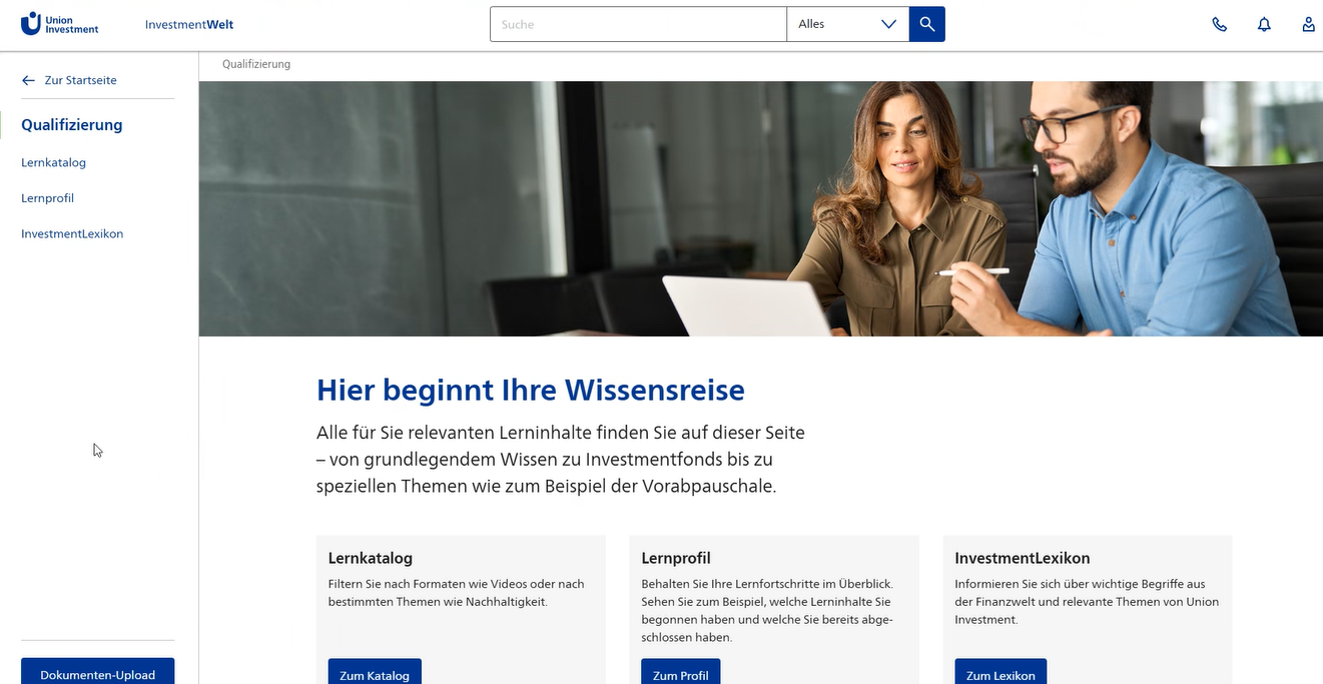
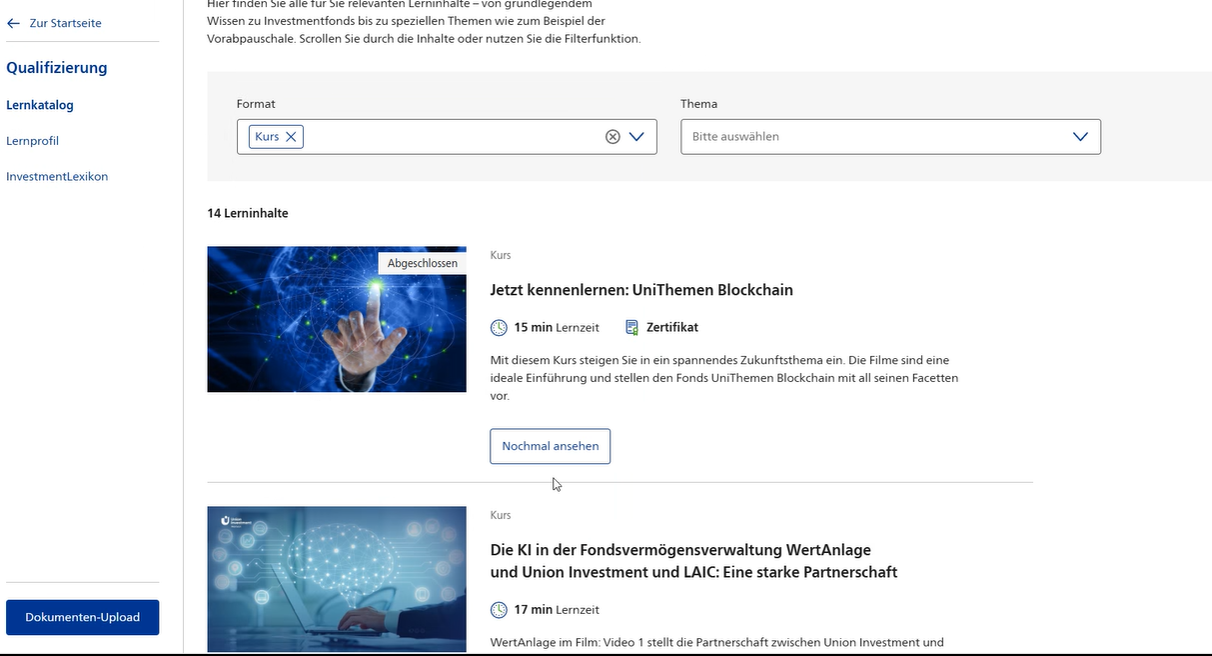
To support these requirements, Union Investment planned the development of a multifunctional financial advisor portal called InvestmentWelt. It brings together all functional areas, from information and specialist applications, such as calculators, to learning, within a consistent and unified user interface. Against this backdrop, the fund management company was looking for a learning platform that could be flexibly adapted to its individual needs and integrated with the other components of the portal.
The solution also needed to meet the high IT security requirements of a financial institution and operate alongside the other components within a unified system architecture in the Azure Cloud.
The solution
Totara emerged as the ideal solution for this challenge: Totara’s customisable architecture provides a flexible foundation for delivering a tailored learning platform to the client. Union Investment’s evaluation revealed that Totara best met the requirement for seamless front-end integration.
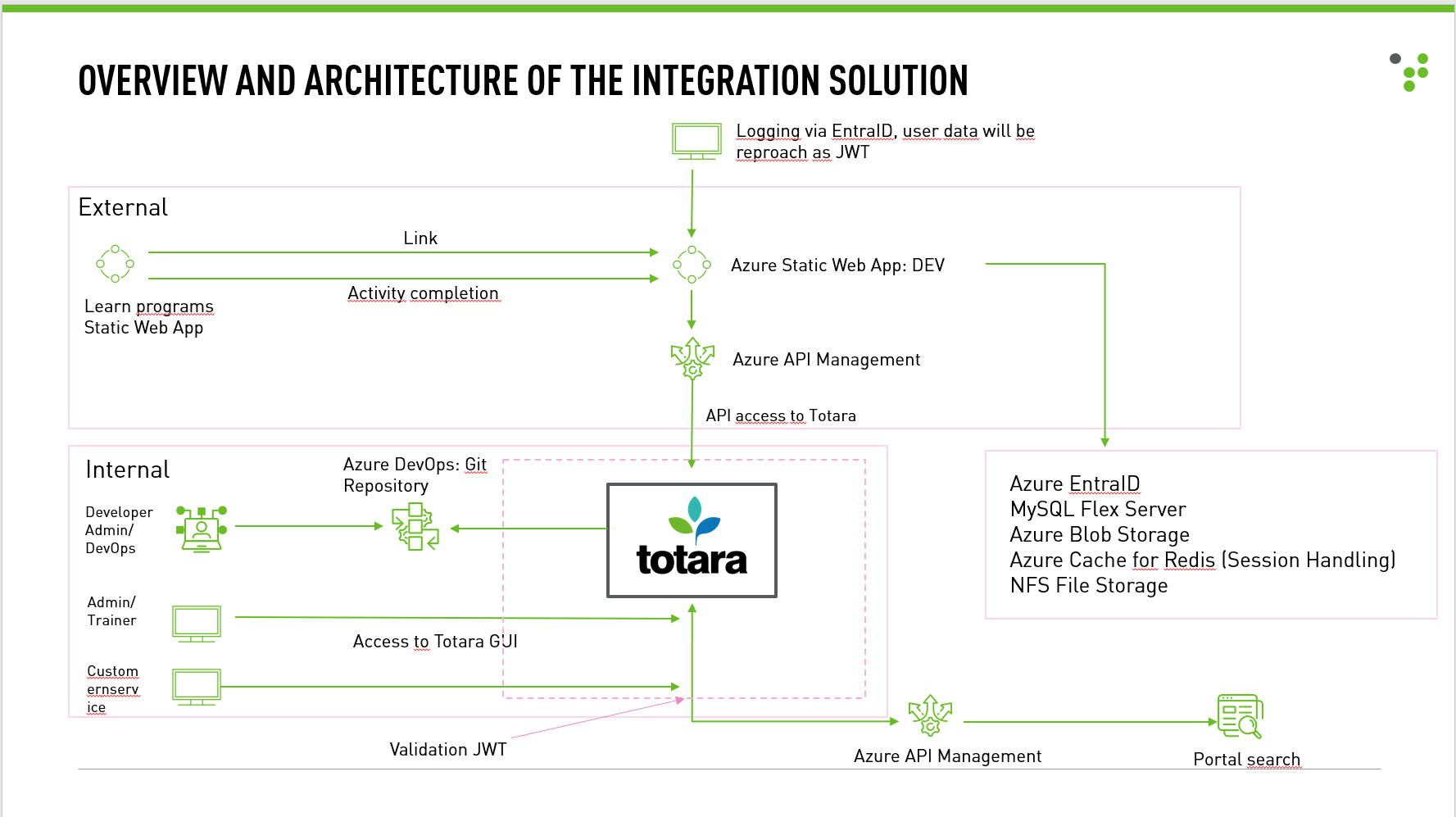
Another key deciding factor was the ability to run the platform within Union Investment’s own Azure cloud infrastructure. At the time, however, there was very little experience hosting Totara on Microsoft Azure. For this reason, the project team worked closely with the DevOps teams to develop and implement a suitable operational architecture for Azure. After several weeks of evaluation and technical testing, Totara was successfully deployed within the Azure environment.
Architectural concept
The platform’s architecture is based on the principle of a Self-Contained System (SCS). Under this approach, the learning platform is built and operated as a standalone, independent system, containing all the components, resources and information within Totara that are required for learning. The learning component is then integrated into the portal via API using a headless approach.
The goal of this architectural approach is to keep all relevant learning logic within Totara. This helps keep processes as simple as possible while improving maintainability and supporting flexible scalability. It also enables fully integrated frontend experiences, avoiding the user journey breaks that often occur between systems such as a CMS and an LMS.
API strategy and extensions
Totara’s GraphQL API was used to integrate and further develop the platform. Since some required functions were not included within the standard scope, a custom extension plugin was developed. This extends the existing GraphQL API with project-specific endpoints and functions.
One advantage of this approach is that individual extensions can be managed separately and removed at any time. This ensures the learning platform remains fully updatable.
Special plugins & integration solutions
A custom plugin was developed to extend activity access restrictions. This plugin allows certificates to be issued only after a defined period has elapsed following completion of an activity.
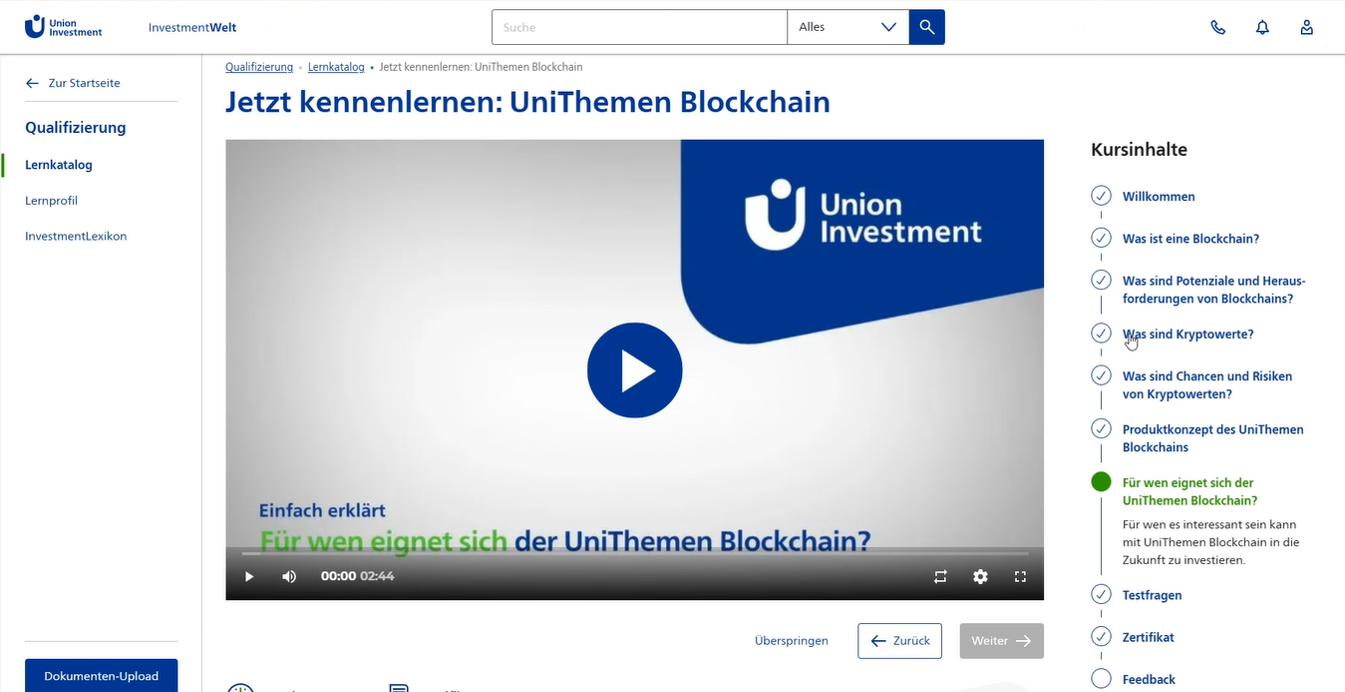
Another plugin was developed to create an additional learning activity for integrating videos from the MovingImage system (VideoManager Pro). Editors can create video activities within Totara and store the relevant video ID.
Authentication and user management
Login is handled through Microsoft Entra ID. To enhance security, authentication based on JSON Web Tokens (JWT) was also implemented. A dedicated authentication endpoint was developed within Totara for this purpose. JWT enables the secure and standardised transmission of user information in accordance with RFC 7519.
Target group assignment
Target groups are assigned using two mechanisms:
- During login, the portal reads target group information from a JWT and stores it in the Totara user profile. This information is then available for the target group-specific delivery of courses.
- A background process also synchronises target group assignments for users who have not logged in for an extended period, ensuring the data remains consistent and up to date.
Access to learning resources
The frontend requires access to resources such as images, documents, or SCORM packages located within the Totara environment, which is accessible only internally. API calls are handled via Azure API Management (APIM). However, a reverse proxy approach was deliberately chosen for accessing resources. Resources are therefore not served directly via Azure APIM, but delivered via a dedicated reverse proxy. This has enabled the creation of a high-performance and secure access solution for static content.
Elasticsearch integration
The “InvestmentWelt” portal provides a global search function based on Elasticsearch. To achieve this, a custom integration solution was implemented to connect Totara courses and content to the portal’s global Elasticsearch database.
An event observer monitors changes to courses and responds to the creation, update, or deletion of learning content. The corresponding data is then automatically indexed in Elasticsearch or removed from it.
Additionally, the search logic takes into account course publication and expiration dates:
- Courses only appear in the search results starting from the defined publication date.
- Once the expiration date has passed, courses are automatically removed from the search results.
- Archived courses must have an expiration date so that they do not continue to appear in search results
The result
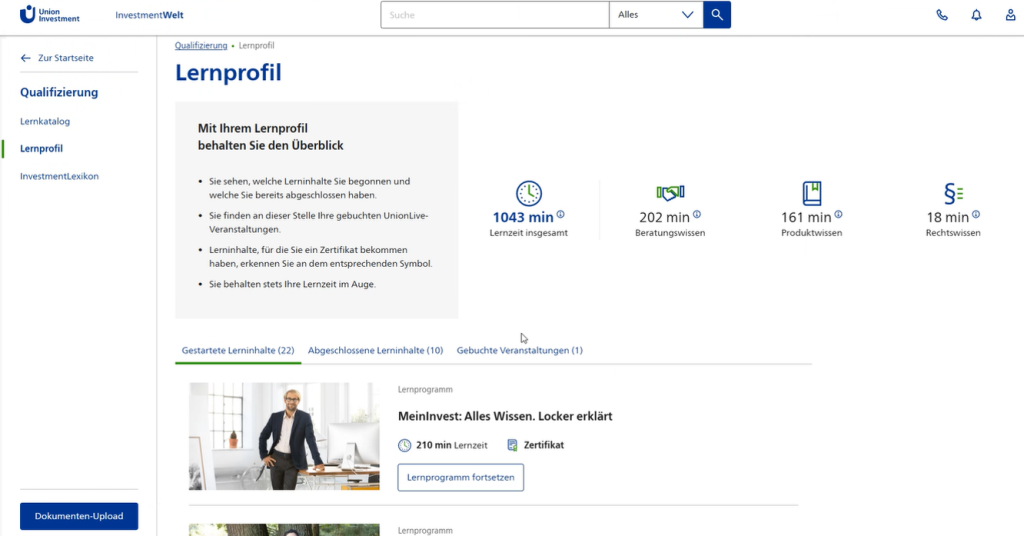
Today, Totara serves as the central learning platform for the InvestmentWelt portal. The portal enjoys strong adoption thanks to its optimised user interface and the integration of numerous value-added services. With almost 40,000 active users, the learning platform is a central component of the portal.
The platform currently delivers 25 fixed learning programmes, including regular reporting. As part of an evaluation of ten learning programmes, enrolments and completions from March 2023 using the previous LMS were compared with figures from March 2024 following the launch of the new portal. This revealed a 68% increase in enrolments and a 65% increase in completions.
The learning platform was implemented over approximately 1.5 years leading up to go-live. In parallel, four to five additional teams worked on adjacent systems and business areas within InvestmentWelt. These teams were coordinated using agile project management based on SCRUM. The platform continues to be developed following go-live.
A key component of the project was implementing security and data protection requirements. In addition to GDPR, the regulatory requirements of the financial sector also had to be met. External consultants can access the portal, while the Totara platform operates within a secure cloud environment at Union Investment that is accessible only internally. As a result, all audits were successfully completed, ensuring a clear separation between external access and the internal system landscape.
The platform is not used exclusively for traditional learning content. It also supports surveys, studies and testing formats. To date, approximately 8,500 participants have been recorded. The data collected supports the identification of product improvements and organisational measures.
In addition, recurring webinars and short-notice events are managed through the platform. Event registrations, in particular, sometimes generate high traffic volumes with several thousand concurrent requests, demonstrating the performance and scalability of the infrastructure and the architectural approach to integration.
Totara’s integration capabilities were key to the project’s success.
Union Investment
Customer

Connected Partner

Customer
Region
Germany
Sectors
Financial & Insurance
Industry Sizes
Large
Solutions
Learn
Connected Partner