
 Nottinghamshire Fire and Rescue (NFRS) protects a population of 1.2 million people and responds to over 10,500 incidents each year. With 720 staff including 560 operational firefighters, the organisation’s ambition is to be recognised as ‘outstanding’ in every area of service delivery.
The Challenge
To achieve this, NFRS needed to modernise how it delivers, tracks and evidences operational training while ensuring firefighters remain safe, compliant and fully aware of hazard identification and risk mitigation.
Working in partnership with Synergy Learning, NFRS implemented a Totara-based LMS that has transformed compliance from a document-led process into a dynamic, measurable and learner-centric experience.
The Solution
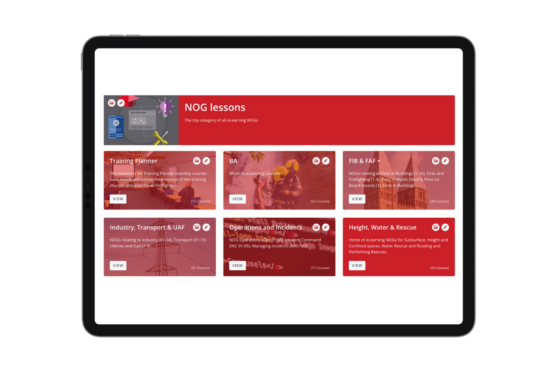
For NFRS, compliance is fundamental to operational safety. A major driver for change was the need to digitise National Operational Guidance (NOGs): mandatory guidance that all UK fire services must follow. Previously, the content existed as written documents and slide presentations, delivered locally with limited consistency and traceability.
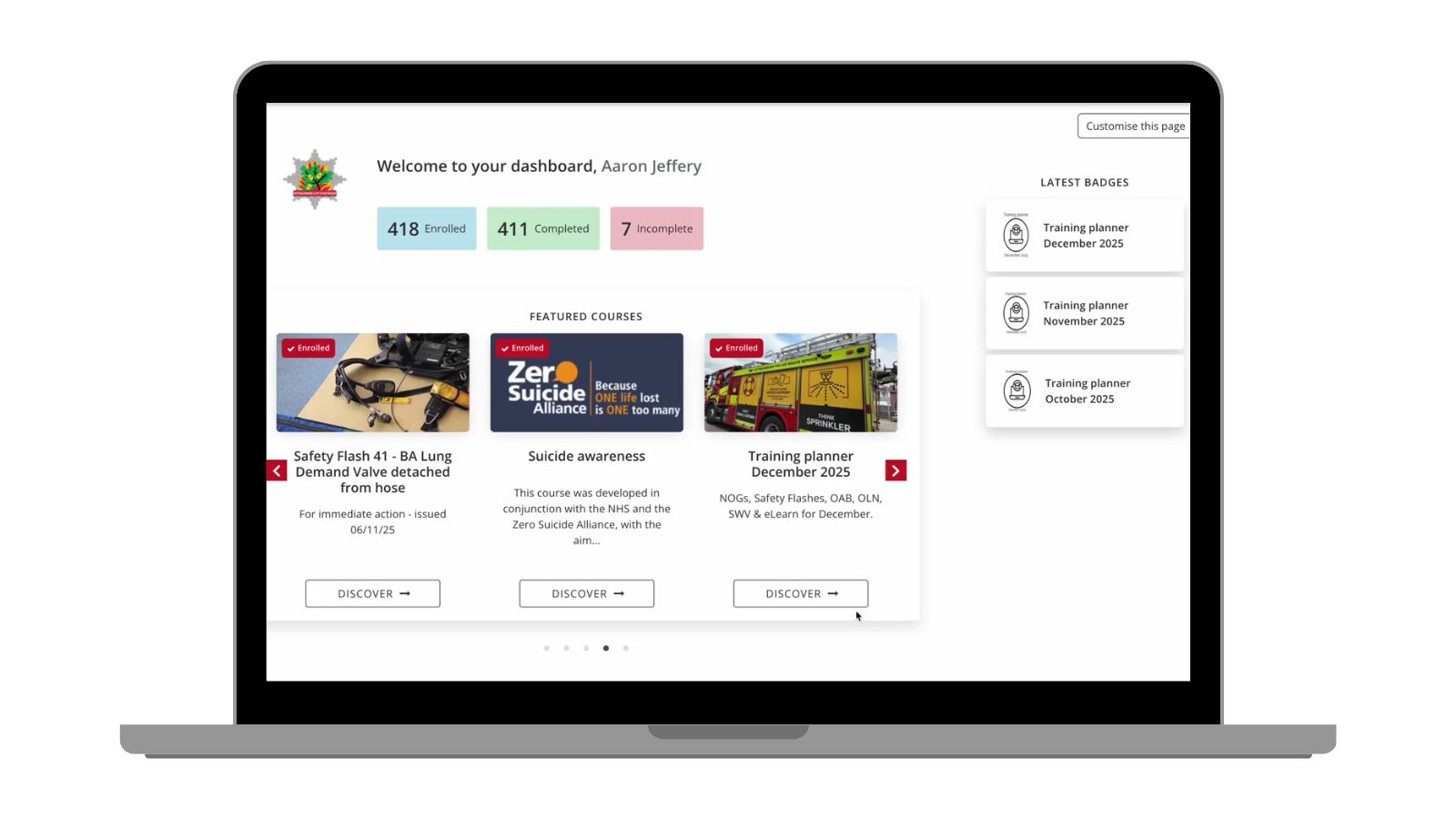
Over a three-year programme, NFRS led the conversion of 134 NOG modules into interactive e-learning, working collaboratively with neighbouring services to standardise interpretation across the region. Materials were standardised, rewritten and distributed as interactive e-learning, ensuring consistent interpretation of national guidance. To avoid cognitive overload, new content is drip-fed to learners each month, this generally follows a competency theme, for example, Fire in Buildings or Water and Flood Rescue.
Automating compliance
The Totara LMS is fully integrated with NFRS’s iTrent HR system. This synchronises role changes, station movements, shift patterns and new starters weekly. Compliance training is automatically assigned based on operational role, ensuring that the right people receive the right training at the right time.
This automation has eliminated manual enrolment processes and significantly reduced administrative burden while providing audit-ready reporting. Compliance is now systematic and dependent rather than relying on manual oversight. This compliance is also subject to external governance in the form of Ofsted style audit.
Learner-centric design
A defining strength of this implementation is its responsiveness to learner feedback. A service-wide survey highlighted strong learner engagement, but was also used to identify opportunities to improve accessibility. There was clear feedback that more varied formats would better support different learning preferences (e.g. video, rather than text-heavy content).
NFRS responded decisively and the next three-year NOG cycle has been redesigned to include more accessible content, greater use of visuals, increased use of narration and more video-based modules. This is particularly important for neurodivergent colleagues and those who process information more effectively through audio or visual means rather than text.
Although accessibility is technically enabled with Totara LMS, NFRS has proactively responded to learner feedback to shape content design around learner needs. Future modules will combine related subjects into streamlined releases and align with monthly drill and exercise suggestions, reinforcing learning through both digital and practical application.
As a result, compliance is now designed to be experienced in a way that works for the individual, based on Level 1 of the Kirkpatrick Model of learning.
Raising standards while protecting operational time
In the emergency services, every second matters so it was important for NFRS to create compliance programmes that also supported operational efficiency. Pre-course e-learning now ensures that theoretical elements of high-risk training (e.g. breathing apparatus exercises) are completed in advance. This means valuable face-to-face training time is focused on critical skill application rather than knowledge delivery.
With Totara’s flexible learning tools, firefighters can complete modules flexibly around shift patterns and on-call responsibilities using a mobile-friendly LMS that works around the demands of frontline work.
The Results
Through its partnership with Synergy Learning and its strategic use of Totara LMS, Nottinghamshire Fire and Rescue Service has transformed compliance into a measurable, inclusive and high-retention experience. Results so far demonstrate this:
- Completion rates are consistently above 95%
- Compliance metrics continue to improve year on year
- Knowledge retention remains exceptionally high , even three years later
- Accessibility is evolving in response to learner feedback
- Administrative burden has been reduced while assurance has strengthened
Most importantly, the service now has evidence that its firefighters understand the guidance that keeps them and their communities safe.
We were amazed when we came back with a knowledge retention rate of 85%, I’d be quite happy with that at lunchtime in a face-to-face training session, never mind 30 months later in e-learning! We were impressed with the flexibility and the level of consultancy that Synergy Learning was able to provide. They were able to understand our requirements and create a user friendly learning portal for staff, and one that we can amend and be comfortable using without having to go back for minor changes.
Training Systems Manager
Customer
Connected Partner
Customer
Region
United Kingdom
Sectors
Government
Industry Sizes
Medium
Solutions
Learn
Connected Partner