
 Emirates Health Services (EHS) is a leading government healthcare provider in the UAE, delivering care through 130+ facilities—including 17 hospitals, 63 primary healthcare centres, and several dental care and specialised care centres—across the Northern and Eastern Emirates.
Through Maharati (“my skills” in Arabic), its Totara-based learning platform, EHS is using AI to create a more agile, scalable, and personalised approach to workforce learning.
The Challenge
EHS was not simply looking for a bigger learning platform; it needed a fundamentally different learning model. As a large public healthcare system operating across a geographically dispersed network, EHS had to ensure that workforce development remained responsive to clinical updates, organisational priorities, and the realities of delivering care across many professions, departments, and service settings. The challenge was not just scale, but relevance: how to make learning more targeted, timely, and useful for staff whose roles, competency requirements, and development needs vary significantly across the organisation.
This created a strategic tension within learning and development. On one hand, EHS needed consistency, governance, and visibility across enterprise-wide training. On the other, it needed flexibility to adapt learning to individual roles, competency frameworks, career stages, and emerging service demands. A conventional course catalogue could not meet both needs effectively. The organisation wanted to move beyond generic training delivery towards a model in which learning was more intelligently matched to the learner, while still remaining manageable at system level.
A second challenge was operational. The volume and pace of learning demand meant that traditional content development workflows were becoming increasingly difficult to sustain. Subject matter experts, educators, and eLearning developers were spending substantial time creating, updating, formatting, and deploying learning materials and assessments. This limited the organisation’s ability to respond quickly to urgent priorities, expand high-quality provision, and scale innovation without increasing administrative burden. EHS needed a way to accelerate the development cycle while preserving the academic, instructional, and clinical quality expected in a healthcare environment.
EHS also recognised that many valuable learning assets already existed across the organisation and beyond it—courses, articles, recorded webinars, video content, and subscription-based knowledge resources—but these assets were not always easy to reuse, adapt, or connect meaningfully to learner need. The intended future state was not just a larger repository of content, but a more intelligent ecosystem in which learning resources could be surfaced, repurposed, localised, and deployed more effectively.
Finally, EHS needed stronger evidence of impact. Leadership and training teams required better visibility of participation, compliance, engagement, and workforce development trends in order to make faster decisions, focus interventions, and demonstrate business value. The intended accomplishment was therefore clear: to create an intelligent, scalable L&D ecosystem that could personalise learning, accelerate content production, reduce manual effort, and provide better insight into workforce capability and performance.
The Solution
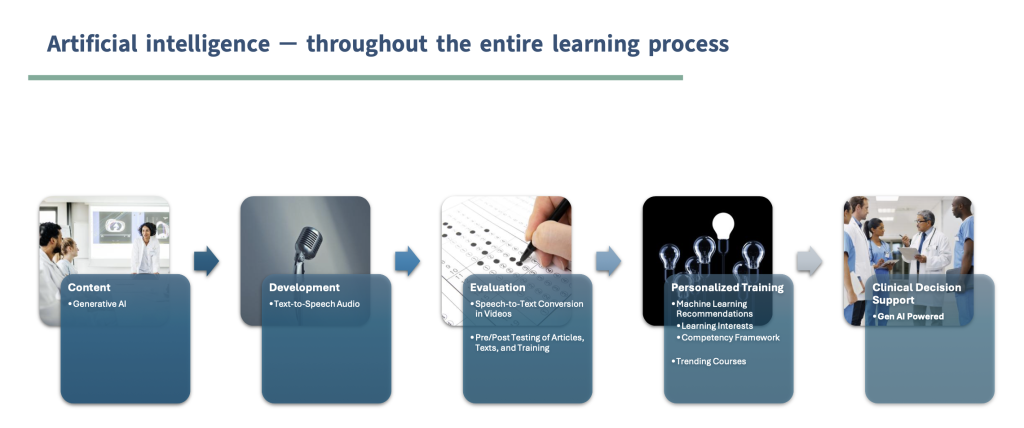
Using Totara as the foundation of Maharati, EHS created an intelligent learning ecosystem that applies AI across the learning lifecycle—from content and assessment development, to personalised training, analytics, and bedside clinical decision support. This reflected a broader shift in strategy: from a focus on the course, to the job, and ultimately to the individual learner. Totara was central because it provided a flexible, scalable platform for personalisation, evidence-based content innovation, multilingual delivery, and enterprise-wide visibility within one environment.
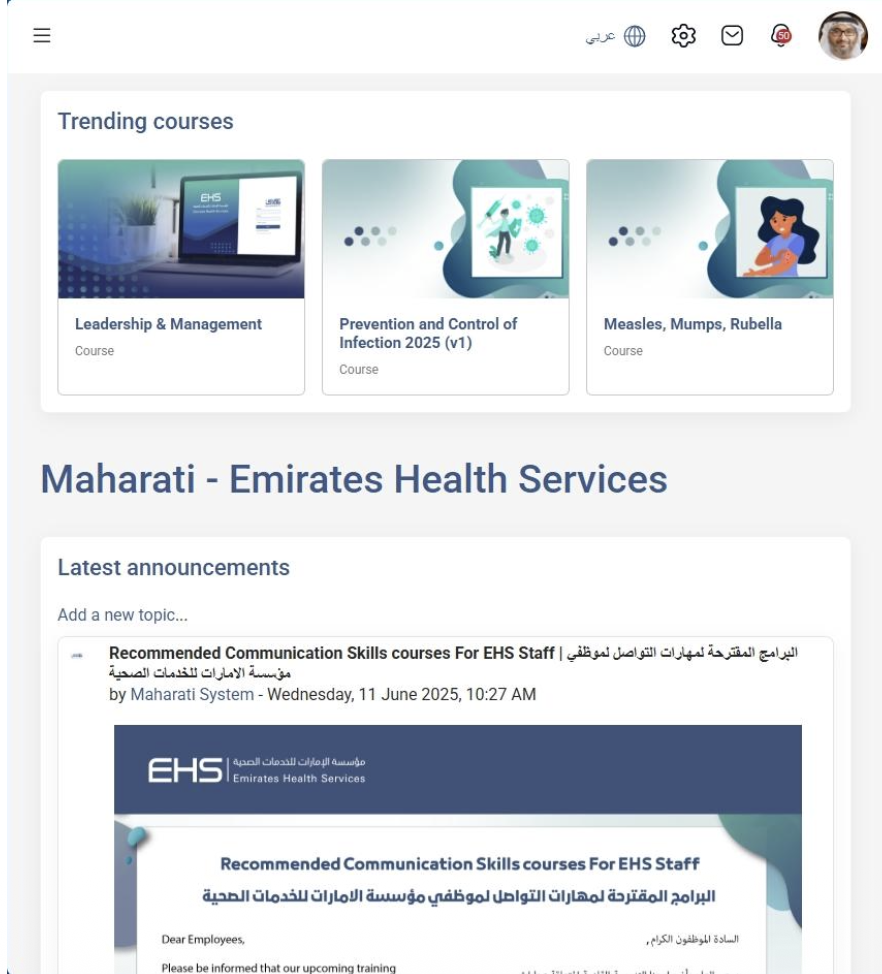
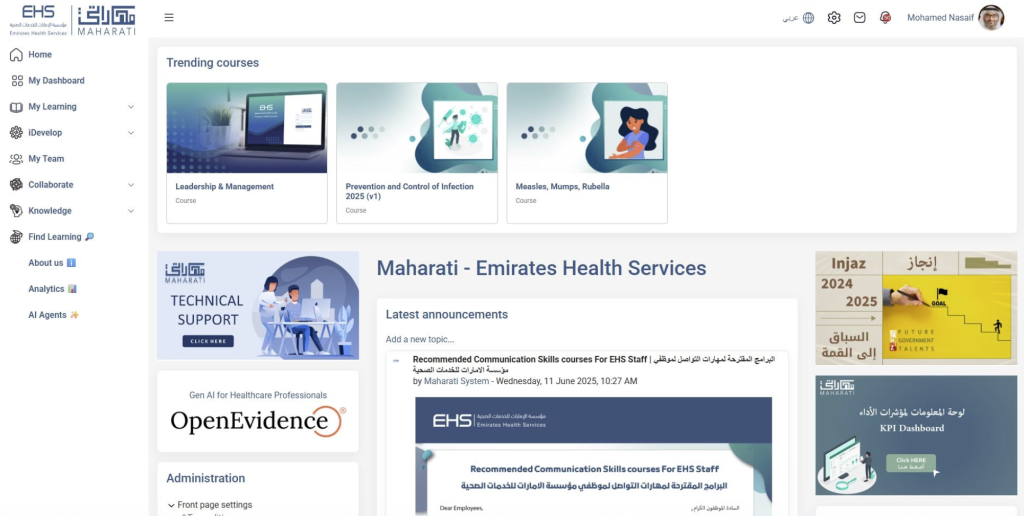
For learners, Maharati uses machine learning to surface trending courses on the homepage and deliver personalised recommendations through “My Dashboard,” based on learner interests, competency frameworks, and development needs. This moved learning away from passive catalogue browsing towards a more intelligent experience in which employees are guided towards content more relevant to their role, practice context, and career growth, without losing organisational consistency and governance.
For educators and subject matter experts (SMEs), Totara became the delivery layer for a faster, more innovative content model. The EHS Training & Development Centre (TDC) embedded generative AI into course and assessment design workflows, enabling teams to move more quickly from source material to learning assets.
For example, Microsoft Copilot helps convert source documents into structured first drafts, slide speaker notes, and course outlines, while Google NotebookLM supports research, synthesis, video summaries, audio podcast-style explainers, summary documents, and infographics from SME-curated references. These workflows are especially useful when transforming PDFs and other source files into multimedia and interactive learning experiences—deployed in Maharati as SCORM activities created with eLearning authoring tools.
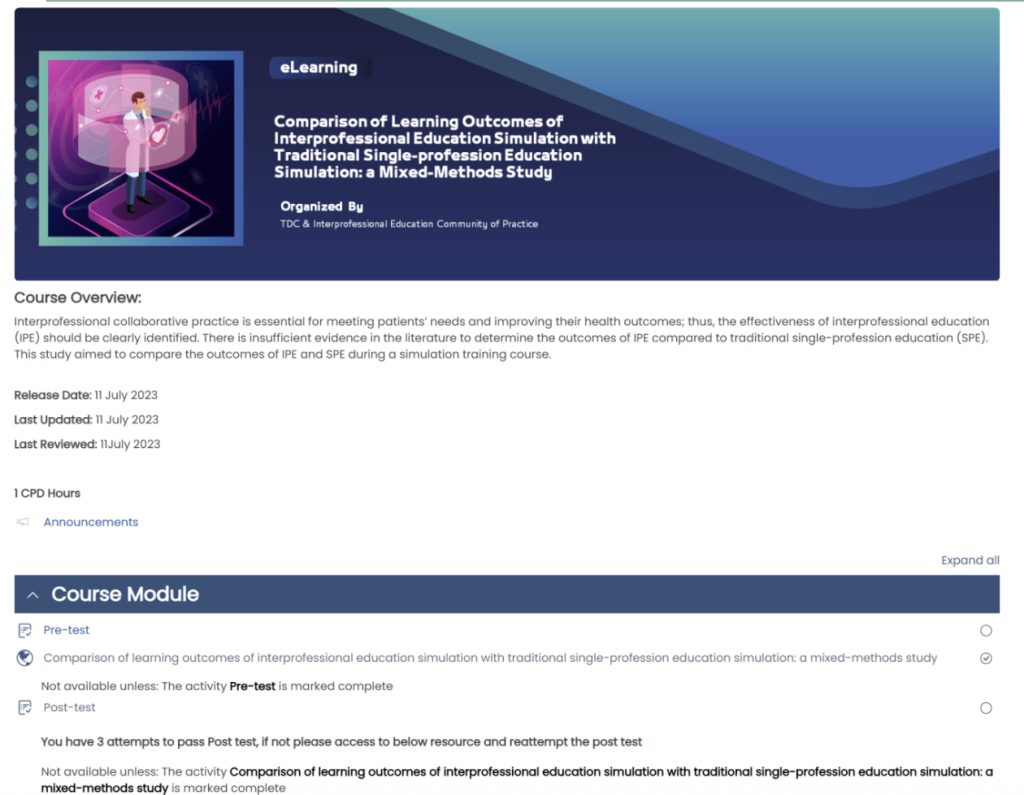
AI also streamlines assessment production. Knowledge checks and pre-/post-test questions can be developed from peer-reviewed scientific books and journals, then reviewed and refined by SMEs before release. Human-validated MCQs and feedback can then be converted using AI into Totara-importable formats such as GIFT and Aiken, reducing repetitive formatting work and accelerating question-bank development. Various NLP tools further extend these workflows: speech-to-text enables educational videos and webinars to be repurposed into assessments and learning activities, while text-to-speech transforms static material into narrated learning experiences.
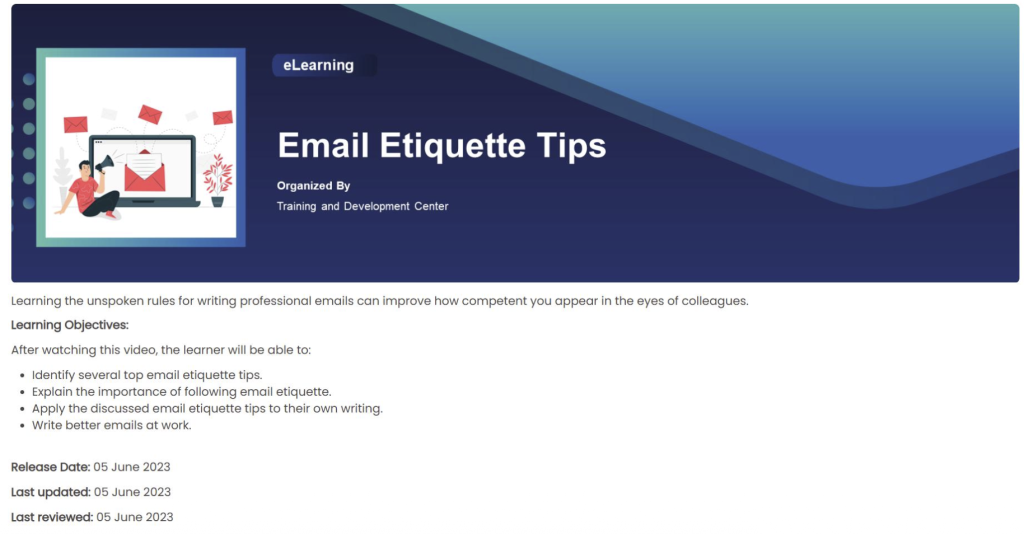
These approaches improve asset reuse, support Arabic and English, and help EHS respond more rapidly to emerging learning needs, including urgent public health priorities.
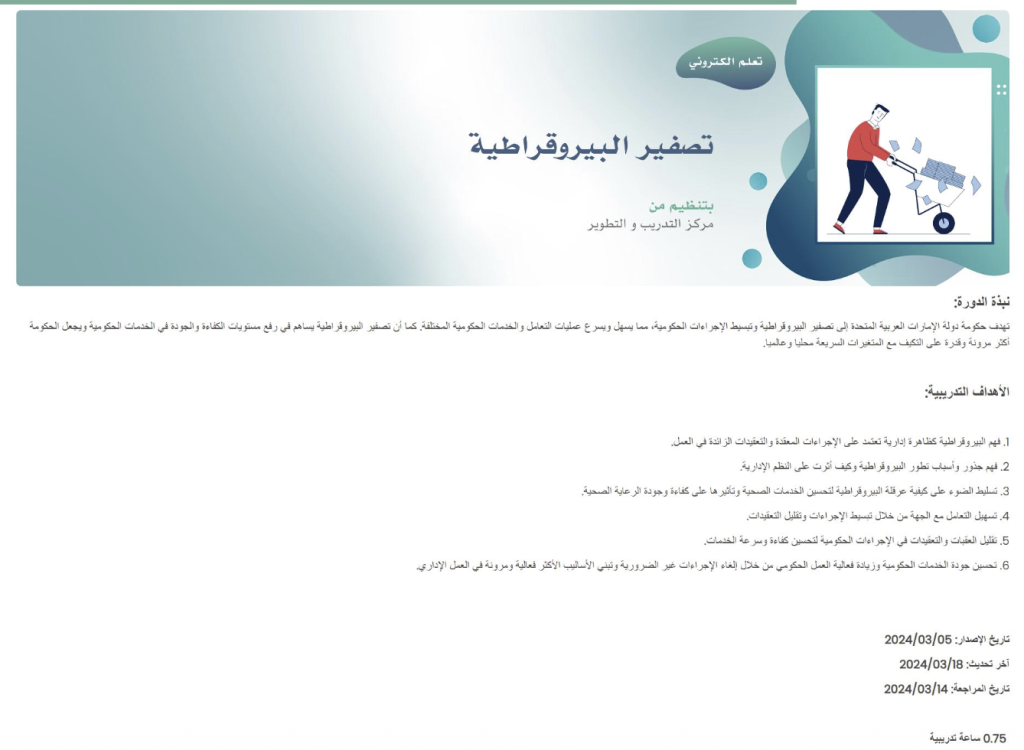
A key strength of the EHS model is that AI augments—not replaces—human expertise. TDC designed a human-in-the-loop workflow in which AI accelerates drafting, conversion, summarisation, and formatting, while educators, clinicians, and instructional designers remain responsible for pedagogy, validation, and final sign-off. This is critical in healthcare, where educational quality, clinical accuracy, and governance standards must be preserved.
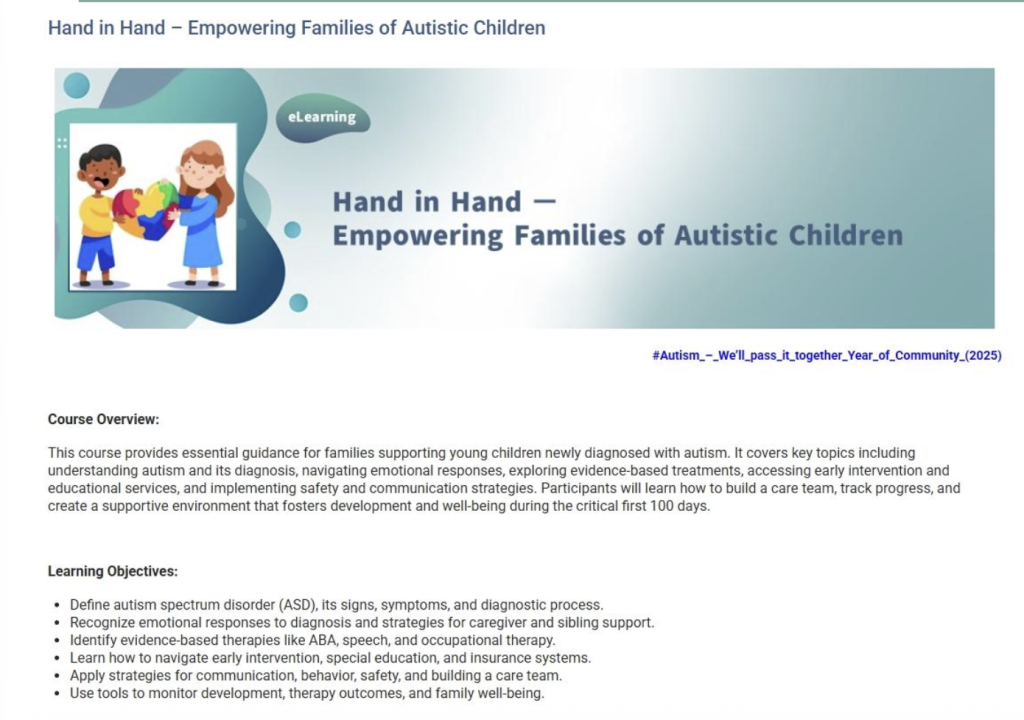
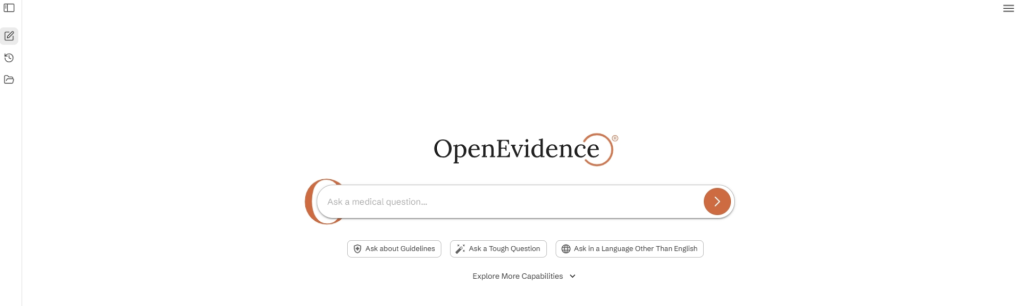
Beyond formal courses, Maharati also functions as a gateway to wider AI-enabled knowledge resources. Staff are guided on how to access and use tools such as OpenEvidence and the ClinicalKey AI Reading Assistant, while Totara also helps surface experimental internal AI agent initiatives, including medico-legal and genetic counselling advisory agents.
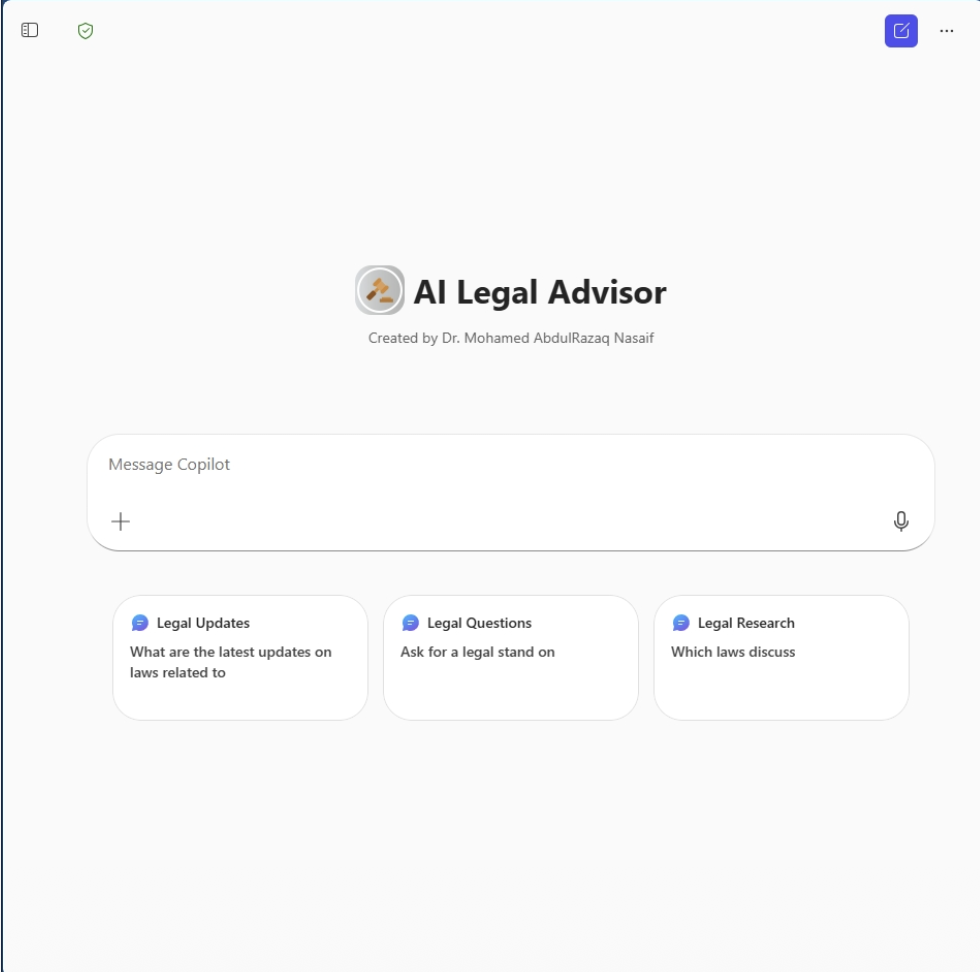
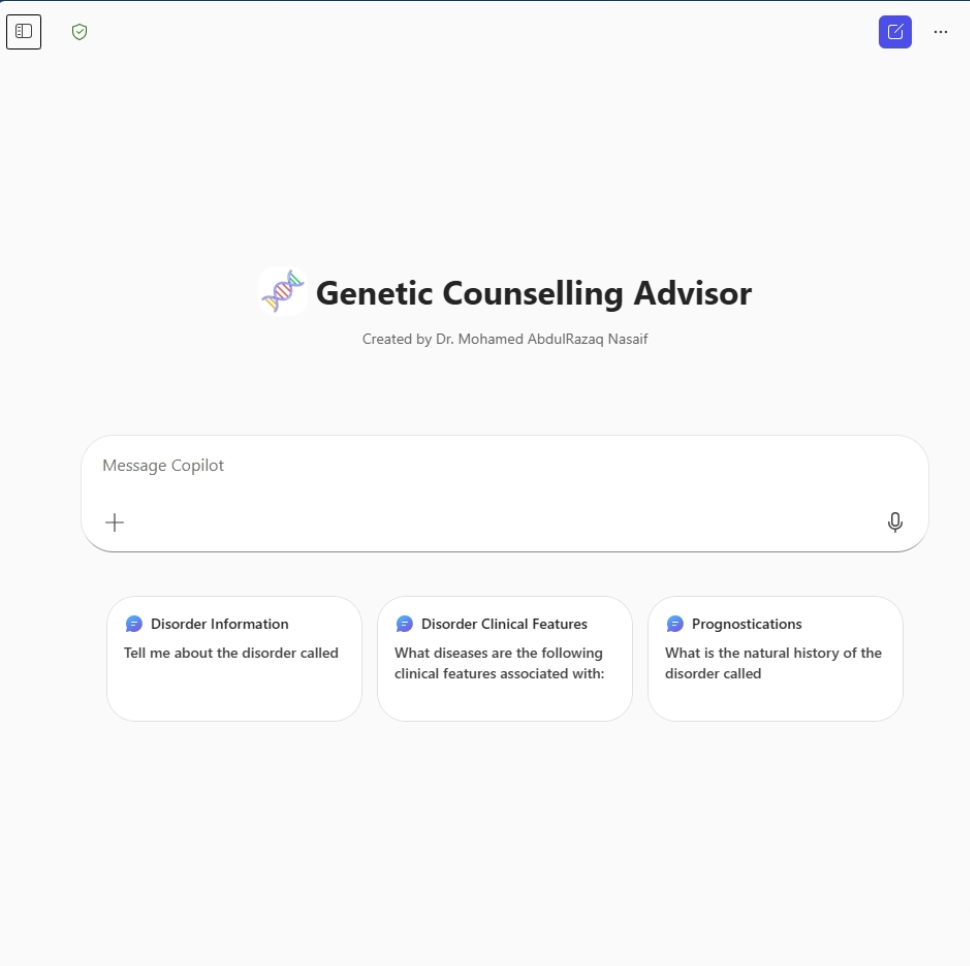
Through homepage links, dedicated pages, integrated dashboards, and Power BI reporting, Totara became more than an LMS: it became an intelligent capability platform that helped EHS personalise learning, accelerate content production, reduce manual effort, and build a more agile, scalable, and data-informed approach to workforce development.
The Results
The impact has been both operational and strategic. By embedding AI into key learning workflows, EHS significantly reduced the time required from SMEs and eLearning developers. Instructional designers can now build complete courses from source documentation in under one business day, accelerating development cycles and enabling TDC to respond faster to organisational and public health priorities. Crucially, AI-driven workflows allow TDC to meet rising course demand without expanding the Maharati team, all while maintaining excellent production standards.
That agility has translated into delivery at scale. Since 2023, Maharati has supported 2.6 million contact training hours, including 1.8 million eLearning hours, reaching all EHS employees as well as several thousand staff from affiliated outsourced organisations across clinical and administrative roles. This shows that the platform is not only innovative, but robust enough to deliver workforce development across a large and diverse healthcare system.
The solution has also supported critical organisational goals. In 2024, EHS achieved 100% compliance with the UAE federal government’s future-readiness eLearning initiative, Jahiz—an important accomplishment for an organisation of 10,000+ employees. This reflects not only the scale of adoption, but also the effectiveness of Maharati as a platform for coordinated, enterprise-wide capability development.
Learner response has remained consistently strong. Average satisfaction scores have stayed above 4.5/5 over the past three years. This is especially significant because satisfaction was already high before the latest digital and AI-enabled developments; maintaining this performance, despite rising learner expectations and a rapidly evolving user digital experience, is a positive indicator of both quality and relevance.
AI-enabled knowledge tools have also shown practice-level value. Surveys found that 46% of clinicians said their search changed their patient management plan, choice of therapy, or diagnostic pathway, while 30.5% said it safely validated their proposed clinical strategy. Although this reflects the impact of AI-supported knowledge access rather than formal course delivery alone, it demonstrates Maharati’s wider value as a gateway to tools that influence clinical thinking and decision support in practice.
Finally, customised dashboards and reports have improved tracking and decision-making. EHS Leaders, managers, and Training coordinators can monitor participation, compliance, and performance more precisely at organisational and individual levels, including in mission-critical areas like communication skills, customer happiness, and public health emergencies. Together, these results show that EHS uses Totara not simply as an LMS, but as an intelligent capability platform that improves speed, scale, compliance, learner relevance, management insight, and the sustainability of high-quality course production.
“Maharati makes it much easier for me to find relevant and engaging courses. I feel more motivated to learn new things that help me provide better care for my patients.”
Emirates Health Services
“Rolling out this urgent training program to respond to an unexpected public health need was seamless. We trained more than 7,000 staff in record time, with an average satisfaction of 4.6/5!”
Emirates Health Services
Customer
Connected Partner
Customer
Region
United Arab Emirates
Sectors
Healthcare
Industry Sizes
Large
Solutions
Learn
Connected Partner