

As the major specialist paediatric hospital in Victoria, the Royal Children’s Hospital Melbourne (RCH) has been providing outstanding care for children and their families for over 150 years. With over 6,000 dedicated staff, the hospital provides comprehensive clinical services, state-wide paediatric trauma care, and international training and research.
The Challenge
Like many healthcare organisations, the RCH has seen a steady increase in Occupational Violence and Aggression (OVA) incidents over recent years. In a paediatric setting, these incidents are often shaped by heightened emotions, complex family dynamics and the developmental needs of children, making standard, adult-focused OVA training insufficient.
The RCH identified several challenges. Existing training approaches were inconsistent across roles and departments, and lacked a clear, risk-based framework to ensure staff received training aligned to their level of exposure. There was also limited capability to manage recurring training requirements or demonstrate compliance at scale.
Administrative processes added further complexity. Face to face training was booked and tracked manually, creating a significant workload for education teams. Engagement was variable, reporting was fragmented, and there was no reliable way to manage refresher cycles or gain a real time view of capability across the organisation.
In 2023, the RCH introduced an Occupational Violence and Aggression Prevention Strategy. A central objective was to develop a bespoke, paediatric focused training framework that would:
- Equip staff with developmentally appropriate de-escalation strategies
- Improve confidence in recognising and responding to aggression
- Align training depth and frequency to risk exposure
- Reduce organisational risk while supporting staff safety and wellbeing
The challenge was not only designing the training itself, but identifying a platform that could support consistent delivery, centralised administration and reliable reporting at scale.
The Solution
The RCH addressed this challenge by designing Paediatric Approaches to Understanding Safe de Escalation (PAUSE), a tiered, risk-based OVA training framework, supported by Totara (branded Learning Hero) as the central learning platform.
PAUSE was structured into three progressive learning pathways:
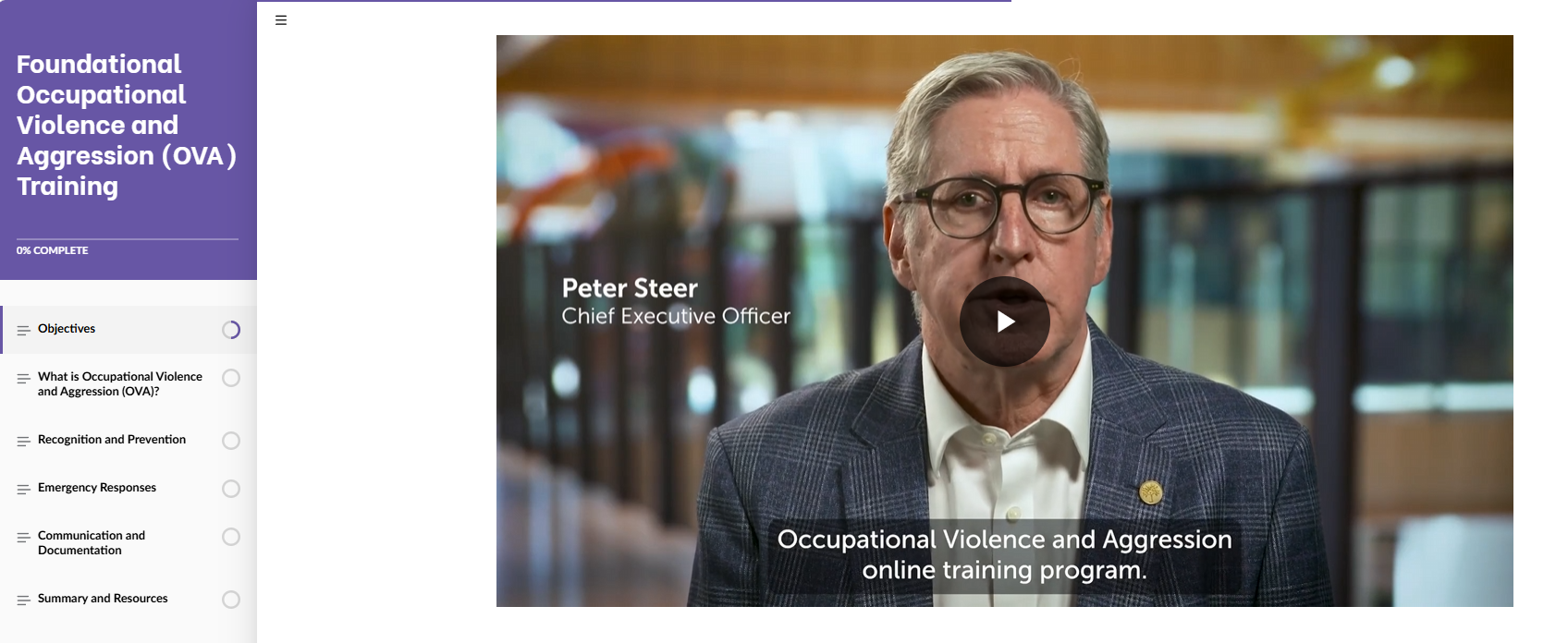
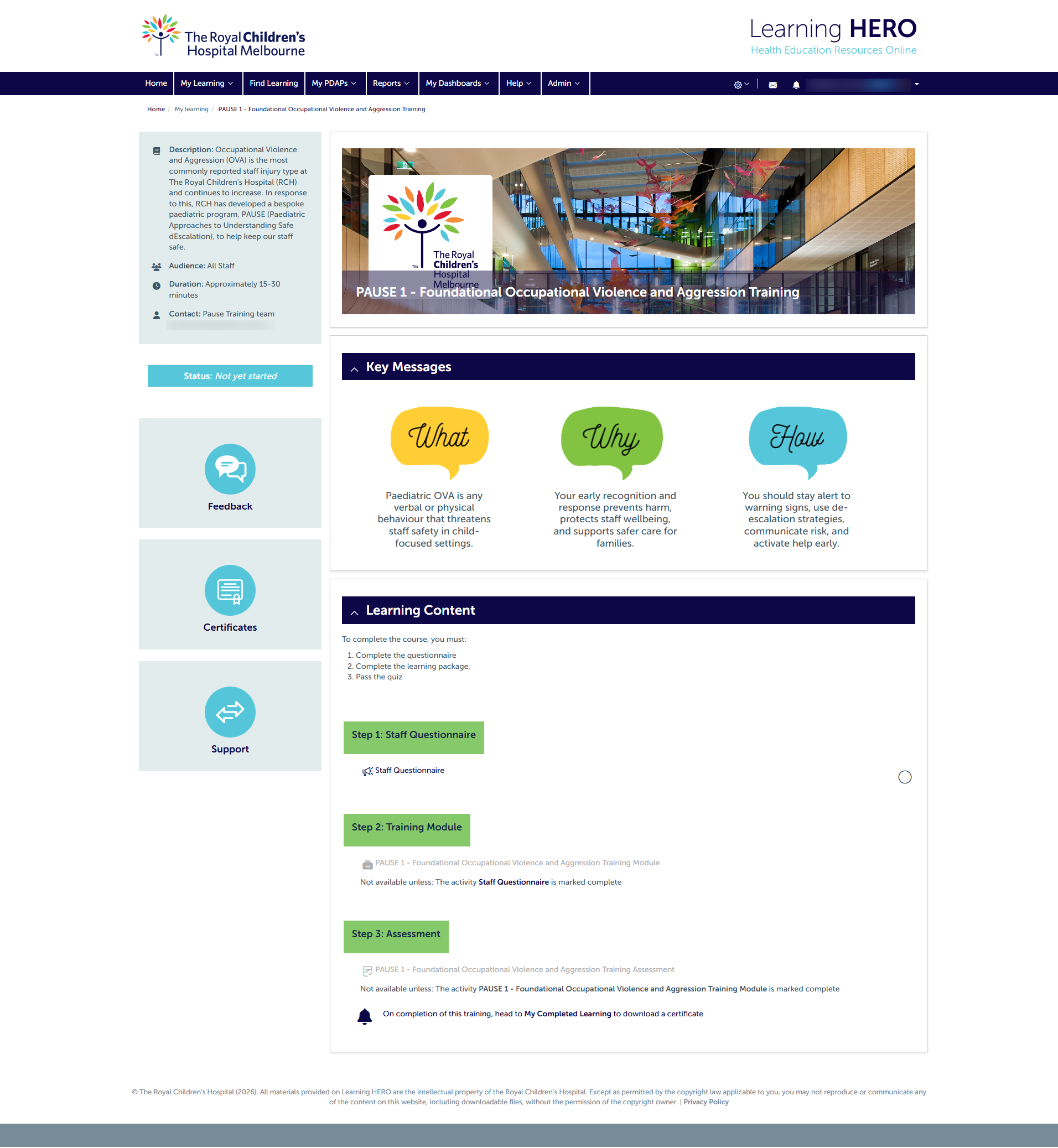
- PAUSE 1: Foundation level knowledge for all staff to prevent, manage and report OVA, delivered online and required annually
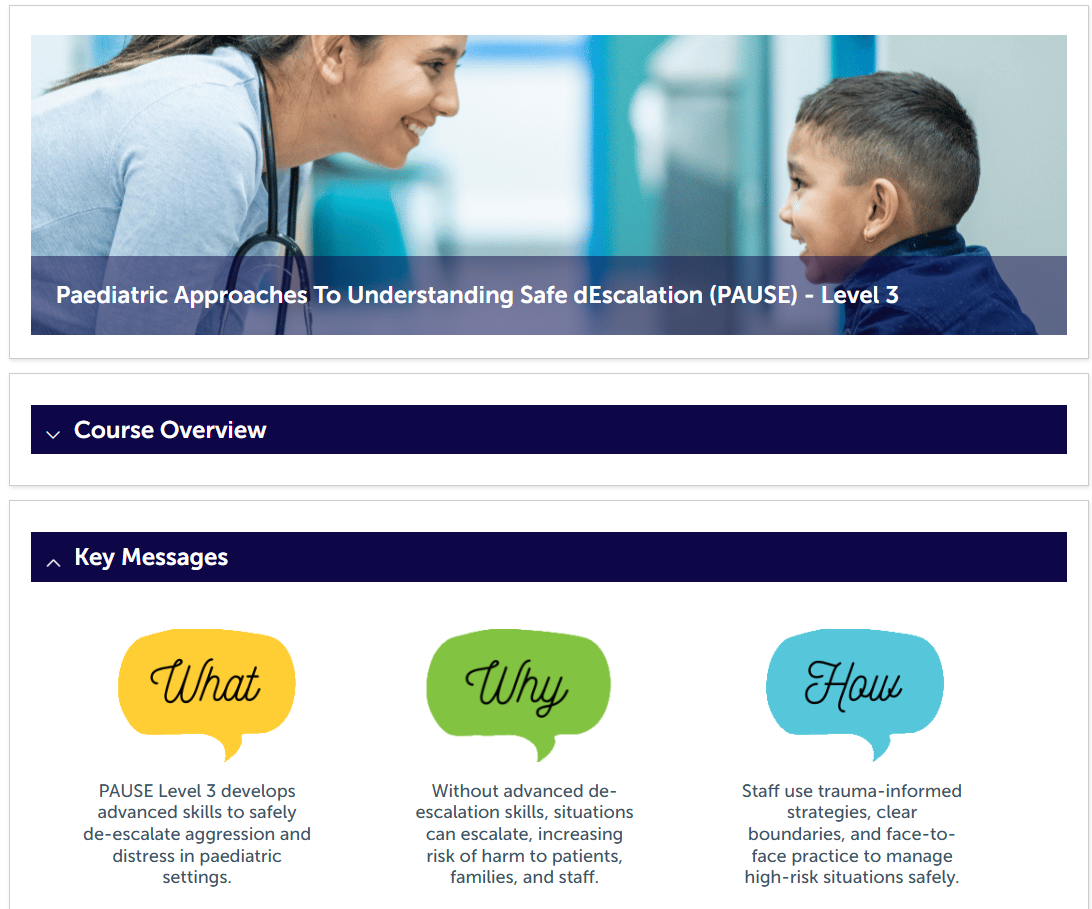
- PAUSE 2: Face to face training for medium-risk staff focusing on risk assessment, restrictive practice, trauma informed preventative care, and breakaway techniques, completed biennially
- PAUSE 3: Advanced, face to face training for high-risk staff including physical skills, followed by ongoing refreshers, completed biennially
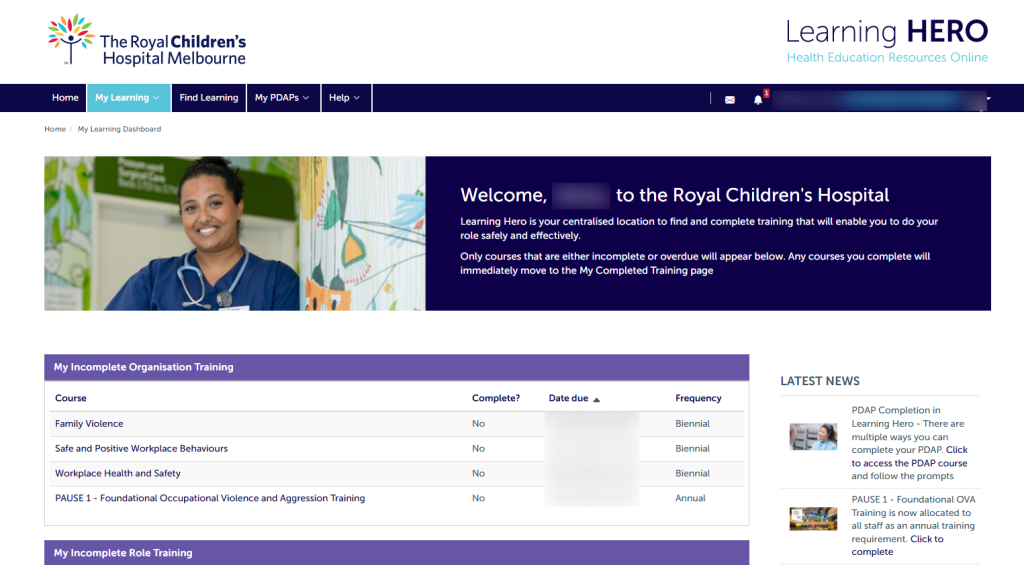
Totara enabled the RCH to operationalise this framework consistently across the organisation. Role-based enrolments ensured staff were automatically assigned training that aligned with their risk profile, while Totara certifications provided a structured way to manage expiry, refresher requirements and long-term compliance.
A critical improvement was the move to centralised booking and certification management for PAUSE 2 and 3. Previously, managing attendance and records for face-to-face training relied on manual processes that limited engagement and visibility. By managing PAUSE 2 and 3 through Totara, the RCH streamlined administration, improved learner experience, and gained accurate, real-time reporting.
PAUSE uses a blended learning model:
- Online learning for PAUSE 1, developed by the RCH Code Grey team
- Centrally managed enrolments, certifications and reporting for PAUSE 2 and PAUSE 3
- Face to face delivery by a growing internal faculty of 20 accredited PAUSE trainers
Totara’s flexibility allowed the RCH to embed OVA training into business-as-usual operations while maintaining strong governance, visibility and scalability.
The Results
The implementation of PAUSE through Totara has delivered clear, measurable outcomes for the RCH.
Strong participation and rapid adoption
- 760 staff have completed PAUSE 3 advanced training, including ward responders, nurses, hospital managers, and selected medical and allied health staff
- Within two months of launching PAUSE 1 online, over 4000 staff (64% of the workforce) completed the foundation PAUSE 1 training
- Monthly PAUSE 2 and 3 sessions are now embedded as standard operations, supported by centralised scheduling in Totara
Significant reduction in administrative effort
- Centralising bookings and using Totara certifications has removed a substantial manual administration burden
- Education teams no longer need to track attendance, expiry or refreshers manually
- Time previously spent coordinating training has been redirected to program quality and continuous improvement
Improved compliance, visibility and reporting
- The RCH now has real time visibility of training status and currency across staff cohorts
- Certifications enable accurate compliance reporting and audit readiness
- Recurring training requirements are managed automatically, reducing organisational risk
Improved engagement and consistency
- Centralised enrolments and clear learning pathways have increased engagement with face-to-face training
- Staff experience consistent expectations and clear development pathways aligned to their role
By using Totara as the foundation for PAUSE, the RCH has transformed OVA training into a scalable, sustainable system, supporting safer care environments while reinforcing its commitment to staff wellbeing and capability.
“PAUSE was designed to give our people the confidence, skills and support they need to manage occupational violence safely in a paediatric environment. Totara has been critical in turning that intent into something scalable and sustainable, allowing us to centralise delivery, manage recurring training with confidence, and clearly demonstrate compliance across the organisation.”
Associate Director, Digital Learning
Customer
Connected Partner

Customer
Region
Australia
Sectors
Healthcare
Industry Sizes
Large
Solutions
Learn, Perform, Totara Suite
Industries
Healthcare
Connected Partner